Thursday, August 26, 2010

Thor's Day


via Fantasy Ink by tom on 8/26/10


Thor #337, November 1983. Cover art by Walt Simonson.


"Thor's Flight," preliminary, circa 1968. Art by Frank Frazetta.


Silver Surfer #4, February 1969. Cover art by John Buscema.


The Lifeaters
, 2003. Story by David Brin, art by Scott Hampton.


Journey Into Mystery #89, February 1963. Cover art by Jack Kirby.


Wednesday, August 25, 2010

Rush jumps into epic 'Time Machine'


Rush guitarist Alex Lifeson remembers one
overriding feeling that came with the making of "Moving Pictures," the 1981
album that became the band's most popular release — fun.


"It
was a very positive experience," Lifeson says in a recent phone interview.
"Sometimes records can be quite difficult. [The 1984 album] 'Grace Under
Pressure,' for example, was a very hard record to make. It seemed to take
forever. Again, we were at Le Studio [in Quebec] and it was very cold. We just
really struggled with that one. But 'Moving Pictures' was quite the opposite. We
had a lot of fun and we had great direction. We did some writing in the studio.
All the sounds came together. There was a great buoyant feeling to the whole
experience."


The
flashback to "Moving Pictures" is relevant now, nearly 30 years after it was
release, for a couple of reasons.


First
of all, Rush is playing that album, which sold more than 4 million copies and
included the hit singles "Tom Sawyer" and "Limelight," in its entirety on its
current 'Time Machine' tour, which arrives at the Allentown
Fair
 grandstand Tuesday. Rush
also played the fair 30 years ago when it released the album.


Second,
there seems to be a parallel between the "Moving Pictures" project and the
experience Rush — which also includes singer/bassist Geddy Lee and drummer Neil Peart — has had so far
in working on a new studio CD, tentatively called "Clockwork Angels."


"We've
got this great feeling of promise for this album and some of the material on
it," Lifeson says. "I think it's all going to work out really great."


For
now though, the focus is on the live show, which figures to be a typically epic
evening of Rush. As on recent tours, the band is playing two sets of about three
hours. But there are some new twists to the show, one of which, of course, is
playing "Moving Pictures" in its entirety during the second set.


Peart
proposed the idea of doing an entire album after he saw Steely Dan on a recent
tour.


"He
was really impressed with the fact that they were doing different albums night
to night," Lifeson says. "That's perhaps a little ambitious for us."


So
Rush decided to do just one of its albums on the tour. The band had already
decided to perform "The Camera Eye," the longest song on "Moving Pictures," for
its current tour, so it was an easy leap to choose the album.


"We
thought it would be a nice way to incorporate doing that song, a little more of
a special presentation," Lifeson says. "The other stuff from that album, we've
been doing for a while on and off, but it was nice to condense it all into the
album and present it that way."


Lifeson
feels "Moving Pictures" still holds up well.


"I
guess it's the wide-eyed nature of the album," he says. "The songs are all quite
cinematic lyrically and musically. It's kind of a very up record, sonically it's
up. 'Limelight' has that big, bold kind of sound, as does 'Red Barchetta' and it
has those typical kind of dynamics that we're known for, [as on] 'Tom Sawyer' of
course. I guess it has all those elements that were in the right balance. Yeah,
you can try as hard as you want and you can't always do that."


There
are other new twists to the set list as well.


"There
are two new songs we're doing ['Caravan' and 'BU2B'], plus a bunch of stuff we
haven't done in a while, like 'Presto' [the title track of Rush's 1989 CD],
Lifeson says. "I'm not sure we've ever played 'Presto' live. So yeah, [there
are] a couple of treats. 'Times Stand Still' (from the 1987 CD 'Hold Your Fire')
is back after taking a long rest. And the sets are very differently paced from
each other, so I think there's quite a different feel between the two sets."


There
will be a new video presentation, with plenty of new footage, and a
high-definition screen at the back of the stage to put it all in sharp focus.
Then there's the light show.


"There's
a large what we call spider over the stage that kind of spreads across the stage
from above with articulating arms or legs, and it moves around and it's really
quite dramatic," Lifeson says. "So there are really lots of great lighting
effects. You know, it's a whole presentation with us. It's not just about the
music."


The
timing for Rush's tour is a bit unusual for the band. Traditionally, it has only
toured after a CD has been released or between album projects. This tour comes
in the middle of writing and recording "Clockwork Angels."


"The
idea was to get back on the road, tour, and then come right back into continued
writing and then recording in tour shape," Lifeson says. "There's nothing that
compares to the kind of shape you get into playing-wise when you're on
tour."


As
it was, work on the album was going along so well that the band decided to make
the two new songs it is playing on the tour available through digital
retailers.


"So
we went to Nashville and recorded the two tracks, 'Caravan' and 'Brought Up 2
Believe' ("BU2B")," Lifeson says. "That happened so quickly and effortlessly and
really was a lot of fun. The whole thing is different for us. I think change is
always a good thing. It keeps things fresher."


Lifeson
says the band has six songs pretty much ready to go and three others almost
done. The group plans to write at least a couple of additional songs after the
tour. At this point, the CD is shaping up to be a musically varied work.


"There
is the epic song, 'Clockwork Angels,' which is really taking shape. It's a
multi-parted piece, very dynamic," Lifeson says. "Then there's some stuff that's
very melodic and on the softer side, on acoustic, with a strong melody. So
there's great diversity there. Honestly, I can't wait until we start really
working on these songs. We've sort of got them to the stage where Geddy and I
were happy with the arrangements and then Neil kind of comes in and starts
working on his drum arrangements, and they go from there. So they're sort of in
that pre-drum stage right now, and it's great to see them come to life."


Lifeson,
of course, would be happy if the rest of the "Clockwork Angels" project were to
go as well as things went in making "Moving Pictures."


The
project went well despite being recorded in the middle of one of the colder
winters in Quebec. The weather meant arriving at Le Studio was a welcome daily
ritual.


"You're
undressing 13 layers of clothes you had on, and you just wandered into the
control room with a cup of coffee or a cup or tea and listened to what you were
doing and it was so great for us," Lifeson says. "We were so happy with the
direction and the sound of what we were getting. In that respect, our work was a
very positive influence on our day-to-day existence up there, which is what it's
all about when you're in a studio, especially in a residential studio. So we
always had that to keep us going."


Choosing the right graphics card for YOU!


Choosing
the right graphics card doesn’t have to be a nightmare, but for many the
experience fills them with dread. The buyer either risks overspending on a
monstrous card featuring ten times as much power as they’ll ever want or
need (or that their PC can handle), or they’ll spend good money on a card that
lets them down when they decide to push it a little.


Either
scenario is far from ideal.


Let’s
take a look at a few typical scenarios and choose a few graphics cards that
would be ideal for those users.


Basic
home user


There’s
so much power available in even the most basic of GPUs that the
basic home user who surfs the web, plays a DVD, or does a little casual
gaming along the lines of FarmVille or Happy Aquarium doesn’t need anything
beyond the basics. In fact, if your PC has any graphics card made in the past
couple of years then chances are that it’s good enough.


That’s
not to say that a basic home user might not want to invest in an upgrade. Video,
especially HD, places quite a hefty demand on the PC in general, and a better
graphics card might take some of the load off the processor and help things move
along a little smoother.


At
this end of the spectrum the user can get away with a very cheap graphics card -
something along the lines of a GeForce 8400 GS or aRadeon HD 4350,
both of which retail now for around $40. These cards will certainly both
outperform any GPU built onto the motherboard of a basic PC, and offer greater
flexibility (for example, be used to fit two monitors onto a single PC - a
massive productivity booster).


The
Blu-ray buff


High-Definition
video places a hefty demand on PCs, so the more of the workload that you can
offset onto the GPU, the better.


For
someone who likes to watch HD Blu-ray they need a graphics card that can handle
the workload with ease, but not something that’s likely to run too hot or be
overly noisy. These users also typically want an HDMI output to be able to hook
up the PC to a flatscreen TV.


One
of my favorite cards for Home Theater PCs (HTPCs) is Radeon HD 5450. This
card retails for around $50 and does everything you’ll need it to do - decent
performance (even for gaming, although I’d rule it out as a DirectX 11 card,
even though it does support it on paper), HDMI support, passively cooled (no
fan, so it’s quiet), and it even features audio bitstreaming.


The
frugal gamer


Not
all gamers can throw down $500 for the latest and best GPU. In fact, thanks to
the triple-whammy effect of the global slowdown, jaded gamers and gaming
consoles, the market for high-end cards has collapsed spectacularly over the
past few years.


Enter
the frugal gamer. This is someone who wants to be able to play the latest games
on his or her PC but doesn’t want to have to be a bank robber to do it. They
will have a middle or the road PC, aren’t concerned with frames per second or
having all the detail in the game turned up to 11. They just want to play
games.


When
the game Crysis was releases, there was a
feeling in the gaming community that things had gone too far. Here was a game (a
good game I might add) that pushed the envelope of technology way too far, so
far in fact that at the time that the game was released there wasn’t a graphics
card yet in existence that did the game justice. I know people who spent a lot
of money on hardware to get this game running decently.


But
since Crysis things have calmed down a bit. Not only have game developers
realized that in order to make money from games, people would like them to run
on existing hardware (modest hardware if possible), but GPUs have come along a
lot too.


The
frugal gamer can equip their PC with a $100 graphics card and should be able to
throw any game at the card and get an acceptable result. Good cards to choose
might be from the Radeon
HD 5670
 range or GeForce GT 240.


Professional
HD video editors


I’m
talking here about the guys and gals that do high-end work using software such
as Adobe Premiere Pro and so on (not Premiere Elements).


Professional
video editors need a lot of power, and ideally good OpenGL support since pro
video editing software usually make use of this standard. While you can get away
with a high-end gaming card, but gaming cards are aimed at gamers. If you’ve
invested in a video editing rig (quad-core CPU, large hard drives, bags of RAM,
a 64-bit OS, and the right software), then spending money on the wrong graphics
card is going to be a let down.


I
suggest that all pro video editors look at the entry level and mid-range NVIDIA
Quadro lines. An entry level Quadro FX 380 will cost under $150, while a
mid-range Quadro FX
1800
 retails for around
$450.


High-end
gaming


This
is for all you high-end gamers out there. Here are some cards for you to drool
over:


  • SAPPHIRE
    100280-4GBB Radeon HD 5970 4GB
     - $1,000
  • XFX
    HD-597A-CNB9 Radeon HD 5970 Black Edition 2GB
     - $720
  • GIGABYTE
    GV-R597D5-2GD-B Radeon HD 5970 2GB
     - $700
  • EVGA
    015-P3-1485-AR GeForce GTX 480 SuperClocked+ 1536MB
     - $550
  • PNY
    XLR8 VCGGTX480XPB GeForce GTX 480 1536MB
     - $500


Note:
Prices are approximate at date of writing. As always, shop around for the best
deals.


__________ Information from ESET Smart Security, version of virus signature database 5393 (20100824) __________

The message was checked by ESET Smart Security.

http://www.eset.com


Tuesday, August 24, 2010

Choosing the right graphics card for YOU!


Choosing
the right graphics card doesn’t have to be a nightmare, but for many the
experience fills them with dread. The buyer either risks overspending on a
monstrous card featuring ten times as much power as they’ll ever want or
need (or that their PC can handle), or they’ll spend good money on a card that
lets them down when they decide to push it a little.


Either
scenario is far from ideal.


Let’s
take a look at a few typical scenarios and choose a few graphics cards that
would be ideal for those users.


Basic
home user


There’s
so much power available in even the most basic of GPUs that the
basic home user who surfs the web, plays a DVD, or does a little casual
gaming along the lines of FarmVille or Happy Aquarium doesn’t need anything
beyond the basics. In fact, if your PC has any graphics card made in the past
couple of years then chances are that it’s good enough.


That’s
not to say that a basic home user might not want to invest in an upgrade. Video,
especially HD, places quite a hefty demand on the PC in general, and a better
graphics card might take some of the load off the processor and help things move
along a little smoother.


At
this end of the spectrum the user can get away with a very cheap graphics card -
something along the lines of a GeForce 8400 GS or aRadeon HD 4350,
both of which retail now for around $40. These cards will certainly both
outperform any GPU built onto the motherboard of a basic PC, and offer greater
flexibility (for example, be used to fit two monitors onto a single PC - a
massive productivity booster).


The
Blu-ray buff


High-Definition
video places a hefty demand on PCs, so the more of the workload that you can
offset onto the GPU, the better.


For
someone who likes to watch HD Blu-ray they need a graphics card that can handle
the workload with ease, but not something that’s likely to run too hot or be
overly noisy. These users also typically want an HDMI output to be able to hook
up the PC to a flatscreen TV.


One
of my favorite cards for Home Theater PCs (HTPCs) is Radeon HD 5450. This
card retails for around $50 and does everything you’ll need it to do - decent
performance (even for gaming, although I’d rule it out as a DirectX 11 card,
even though it does support it on paper), HDMI support, passively cooled (no
fan, so it’s quiet), and it even features audio bitstreaming.


The
frugal gamer


Not
all gamers can throw down $500 for the latest and best GPU. In fact, thanks to
the triple-whammy effect of the global slowdown, jaded gamers and gaming
consoles, the market for high-end cards has collapsed spectacularly over the
past few years.


Enter
the frugal gamer. This is someone who wants to be able to play the latest games
on his or her PC but doesn’t want to have to be a bank robber to do it. They
will have a middle or the road PC, aren’t concerned with frames per second or
having all the detail in the game turned up to 11. They just want to play
games.


When
the game Crysis was releases, there was a
feeling in the gaming community that things had gone too far. Here was a game (a
good game I might add) that pushed the envelope of technology way too far, so
far in fact that at the time that the game was released there wasn’t a graphics
card yet in existence that did the game justice. I know people who spent a lot
of money on hardware to get this game running decently.


But
since Crysis things have calmed down a bit. Not only have game developers
realized that in order to make money from games, people would like them to run
on existing hardware (modest hardware if possible), but GPUs have come along a
lot too.


The
frugal gamer can equip their PC with a $100 graphics card and should be able to
throw any game at the card and get an acceptable result. Good cards to choose
might be from the Radeon
HD 5670
 range or GeForce GT 240.


Professional
HD video editors


I’m
talking here about the guys and gals that do high-end work using software such
as Adobe Premiere Pro and so on (not Premiere Elements).


Professional
video editors need a lot of power, and ideally good OpenGL support since pro
video editing software usually make use of this standard. While you can get away
with a high-end gaming card, but gaming cards are aimed at gamers. If you’ve
invested in a video editing rig (quad-core CPU, large hard drives, bags of RAM,
a 64-bit OS, and the right software), then spending money on the wrong graphics
card is going to be a let down.


I
suggest that all pro video editors look at the entry level and mid-range NVIDIA
Quadro lines. An entry level Quadro FX 380 will cost under $150, while a
mid-range Quadro FX
1800
 retails for around
$450.


High-end
gaming


This
is for all you high-end gamers out there. Here are some cards for you to drool
over:


  • SAPPHIRE
    100280-4GBB Radeon HD 5970 4GB
     - $1,000
  • XFX
    HD-597A-CNB9 Radeon HD 5970 Black Edition 2GB
     - $720
  • GIGABYTE
    GV-R597D5-2GD-B Radeon HD 5970 2GB
     - $700
  • EVGA
    015-P3-1485-AR GeForce GTX 480 SuperClocked+ 1536MB
     - $550
  • PNY
    XLR8 VCGGTX480XPB GeForce GTX 480 1536MB
     - $500


Note:
Prices are approximate at date of writing. As always, shop around for the best
deals.


__________ Information from ESET Smart Security, version of virus signature database 5393 (20100824) __________

The message was checked by ESET Smart Security.

http://www.eset.com


Wednesday, August 18, 2010

Black Sabbath’s Bill Ward shares his ‘Paranoid’ experience


Bill Ward, 2010. Photo courtesy of Bill Ward.

By Pat Prince

Black Sabbath has had several incarnations, and eight different drummers, over its 41 years. But most fans think of Bill Ward as the drummer who represents the band.

And “Paranoid” as the album that defines Sabbath so perfectly.

To mark the 40th anniversary of “Paranoid,” Eagle Rock Entertainment has released, through its “Classic Albums” series, a DVD documentary on the famous 1970 album that was originally going to be called “War Pigs.” It’s a peak inside a band that — at the time — was huddling together to survive, yet still created some of the most dynamically somber and provocative music ever recorded.

Bill Ward remembers “Paranoid” as the album that changed it all for Sabbath. It gave the band recognizable songs in “Iron Man,” and even gave Sabbath its few Beatles’ moments of screaming fans (mostly British teenyboppers) chasing unprepared musicians down the street.

Over the years, Bill Ward has become a genuine spokesman for the band, as well as the guy who keeps its natural beat. At 62, he is still willing and ready to summon up the energy for a full Sabbath tour, at any moment, almost matching the same enthusiasm he had during the “Paranoid” sessions.

A younger Bill Ward in the studio

Recently, Goldmine had a chance to speak with the legendary drummer, who is busy working in the studio on his latest solo album, a labor of love in its final stages (there is no release date as of yet).

What are your feelings about the way the “Paranoid” documentary DVD came out?
Bill Ward: I’m okay with it now. When I first saw it, I had some grumblings about the pace and the general production. I made my point of view heard to the producer and I got some feedback, and everything became amicable. Things got sorted out a little bit.

My biggest concern was that there was quite a long period of exchange between Tony (Iommi) and Geezer (Butler) without any other artist’s verbiage. And it was pointed out to me that that was what the show was about. And I said ‘I understand that, I’m quite a huge fan of the show. I think I’ve seen every band that’s appeared on there. I get that but I still think that it’s too long.’ Anyway, I was able to settle in and be okay with that, but that was the only rub that I had with the DVD.

But I like it because it is a little bit different. For me, I’ve never seen Black Sabbath given a slightly different look from a slightly different angle. I think in that sense, it’s quite fresh.

How do you feel about the album “Paranoid” getting this sort of reexamination?
Ward:
 I like that it’s being looked at again and that it’s been given some credit. I think it deserves some credit, in the sense that we were just playing it as who we were. We didn’t have a process of thinking the whole thing out. There wasn’t anything contrived about it. It was very much almost a phenomena of four guys playing together, being as one, being a band, a real band.

Did you realize how special the album was while creating it?
Ward: 
There were several things that I felt back then but I knew that we were into something different. I mean, I think we all did. We knew that we were tapping into something we enjoyed very much. But we knew that it was different. And we knew that it was fragile as well, in the sense that this might not last more than five minutes, you know. Because there were so many opponents in, for lack of better words, higher places that were out to get that album and not give it any time at all.

As with many Black Sabbath albums, there’s quite a lot of substance. In a way, it’s too bad that the album wasn’t called “War Pigs” as it was intended because it would have made an even greater statement.
Ward:
 Well, we wanted to call it that but nobody seemed to understand. I don’t blame them, you know. Vietnam, a lot of people were being killed there every day so … I can appreciate them not using the name, in that sense.

But it was quite an effective anti-war statement.
Ward: 
I think we made a good statement and we put a lot of force into it. When we still play it today … well, that last time Sabbath toured — which was about four years ago, as the original band — “War Pigs” was still a very traditional favorite for everyone. So it still stands. Unfortunately, it still stands in today’s dynamics as well with Iraq and all the different places where there’s so much trouble and death going on. That’s the downside of it but we made a good record and a good statement.

The fact that the music is still relevant today is a huge testament to the power of the songwriting on the album. A lot of bands don’t have that running power.
Ward:
 When we played these songs originally, like I said earlier, we didn’t know if it was going to last or not. It was actually quite fragile in many ways. But then Sabbath became generational. I guess that happens, where other bands become almost cultish. The life of Sabbath has been dependent upon others who have been influenced by Sabbath’s music, just by granddad telling grandson: ‘Hey, check this band out.” That’s been amazing that part. We started to notice that when the guys showing up now are 50, 60 years old, and the kids there as well are, like, 10 years old. It’s really neat, actually. It’s very nice to see all that. I’m quite pleased how it’s turned out to be influential with other musicians, too. To me, those are the things that are like silent gifts that you get when you get old. I hope that I received them with a modicum of humility and not big-headed about it.

Can you elaborate more on your use of the word “fragile”?
Ward: 
Back then, when we were making “Paranoid” — and when we made our first album — we were still very much a band and we were very tight. There was the band, then the road managers and then the other people who would drive us around and take care of us, you know. There was probably ten of us, ten people together, and in a lot of ways there was a lot of internalizing. You know, we took care of each other’s back and we looked after each other. We were really like one. I often referred to it as the Four Musketeers. It felt like that because there was so much coming from the outside. Between the media and tv and all the new audiences that we were were reaching, all the new countries that we were traveling in. There was still very much this newness to everything. And I guess a sense of mistrust. We come from a really really hard, tough area in Birmingham so we learned to grow up with one eye always open, so to speak, we weren’t stupid, in that sense we were pretty street smart.

Keeping that in mind, as we were passing through record companies or talking to lawyers or anything like that, we were much very private. We huddled down and discussed everything and what was going on. We had just come from a huge two-year of touring in Europe where we would share our food. We were quite penniless so when we were playing the Star-Club and going through the Reeperbahn and doing all the things in Denmark and Sweden and so on and so forth, when we were doing those gigs prior to 1970, we had to learn how to survive because we were basically living for food and playing for food and things like that. So that really does breed a tough veneer, if you like. So we had that for some time. That traveled with us into the new world and the new changes that we were going through, or were about to go through. And that’s what I meant by ‘fragile.’


Friday, August 13, 2010

Rush – Roll The Bones

Well, you can stake that claim
Good work is the key to good fortune
Winners take that praise
Losers seldom take that blame
If they don't take that game
And sometimes the winner takes nothing
We draw our own designs
But fortune has to make that frame


We go out in the world and take our chances
Fate is just the weight of circumstances
That's the way that lady luck dances
Roll the bones


Why are we here?
Because we're here
Roll the bones
Why does it happen?
Because it happens
Roll the bones


Faith is cold as ice
Why are little ones born only to suffer
For the want of immunity
Or a bowl of rice?
Well, who would hold a price
On the heads of the innocent children
If there's some immortal power
To control the dice?


We come into the world and take our chances
Fate is just the weight of circumstances
That's the way that lady luck dances
Roll the bones


Jack -- relax.
Get busy with the facts.
No zodiacs or almanacs,
No maniacs in polyester slacks.
Just the facts.
Gonna kick some gluteus max.
It's a parallax -- you dig?
You move around
The small gets big. It's a rig
It's action -- reaction
Random interaction.
So who's afraid
Of a little abstraction?
Can't get no satisfaction
From the facts?
You better run, homeboy
A fact's a fact
From Nome to Rome, boy.


What's the deal? Spin the wheel.
If the dice are hot -- take a shot.
Play your cards. Show us what you got
What you're holding.
If the cards are cold,
Don't go folding.
Lady Luck is golden;
She favours the bold. That's cold
Stop throwing stones
The night has a thousand saxophones. So get out there and rock,
And roll the bones.
Get busy!


Roll the bones


Why are we here?
Because we're here
Roll the bones
Why does it happen?
Because it happens
Roll the bones

John Lennon - Imagine

Imagine there's no heaven
It's easy if you try
No hell below us
Above us only sky
Imagine all the people
Living for today...
Imagine there's no countries
It isn't hard to do
Nothing to kill or die for
And no religion too
Imagine all the people
Living life in peace...
You may say I'm a dreamer
But I'm not the only one
I hope someday you'll join us
And the world will be as one
Imagine no possessions
I wonder if you can
No need for greed or hunger
A brotherhood of man
Imagine all the people
Sharing all the world...
You may say I'm a dreamer
But I'm not the only one
I hope someday you'll join us
And the world will live as one

Wednesday, August 11, 2010

Malicious Software Removal Tool


Do you ever run this? It is updated monthly but since there is not an icon
for it I don’t think most people run it. Just click on the start orb and type
MRT and hit enter.


What
is the Malicious Software Removal Tool?


In early 2005, Microsoft
started releasing a software product called the Microsoft Malicious
Software Removal Tool. Its a monthly update released on the second Tuesday
of each month (Patch Tuesday) to help scan user's computers and remove
viruses and malware. MRT uses a
signature
database
they
update on a monthly basis. Because this database
does not have virus signatures and patterns for
EVERY virus in the wild, its meant to just help prevent the infection and
spread of the most prevalent issues. For this reason, you should still run
antivirus software on your computer even though the Malicious Software
Removal Tool is being run on your computer.


Normally, this removal
tool is downloaded via Windows Update
and runs silently in the background to check
for infections on the computer. It runs a quickscan for the worst
infections, but what if you would like to use the removal tool to run a
more thorough scan of your computer. We'll show you how to manually start
the MSRT and how to run a thorough scan for problems.


How to Run the Malicious
Software Removal Tool Manually


Follow the steps below to open
MSRT and change the default settings.

1) Click on Start, Run
2) Type
MRT and Press Enter
3) You'll be presented with the following screen, click
on the Next button

Malicious Software Removal Tool Startup Screen

4) Normally, the removal
tool runs the Quick Scan, but for more thorough results, choose FULL SCAN and
click Next

Malicious Software Removal Tool Scan Options

5) Now the Malicious
Software Removal Tool will scan your entire hard drive for infections and
problems.


MSRT Scan in Progress

6) Once the scan is completed,
you should see the following screen if your computer is free of infection.

MSRT Results Page

7) If you click on the View
Detailed Results of the Scan option on the Results page you should see which
viruses, worms, and trojans the removal tool scanned for
and if an infection was found.

MSRT Detailed Results

8) Click Finish on the Scan
Results page to exit the Microsoft Malicious Software Removal Tool

Log File
Results


Whether you manually run the removal tool or it runs
automatically when downloaded from Windows Updates, you may want to view the
scan results log to see what it scanned for and what it found. The log file
(mrt.log) will be found in the Windows\Debug folder. If you are running Windows XP or Windows Vista, this file is probably located
at

c:\windows\debug\mrt.log

Follow the instructions below to
open it.


1) Click on Start, Run
2) Type the following and Press
Enter


notepad
c:\windows\debug\mrt.log


3) The
log file will open in Windows Notepad. Each scan will log its results in the
file. If you had an infected file, you will see something like the following in
the log file.


Microsoft Windows Malicious Software Removal Tool
v1.33, September 2007
Started On Sat Sep 15 21:41:52 2007

Extended
Scan Results
----------------
->Scan ERROR: resource
file://C:\pagefile.sys (code 0x00000020 (32))
Found virus:
Backdoor:Win32/Nuwar.B!ini in file://C:\Documents and
Settings\Mark\spooldr.ini
Found virus: Backdoor:Win32/Nuwar.B!ini in
file://C:\Documents and Settings\Mark\Desktop\Virus Info\spooldr.ini
Found
virus: Trojan:Win32/Tibs.DC in file://C:\System Volume
Information\_restore{3C8729AD-DC07-4E82-8FC5-363FFE9EB86D}\RP14\A0020913.exe

4)
Click on the X in the upper right corner to close Notepad

More
Information


For more information on the Microsoft Malicious
Software Removal Tool visit
their help page
or click on the following link to go to the home page for the removal tool


This is the best online virus scanner I have used

Friday, August 6, 2010

How to send pictures in email with ACDSee 3


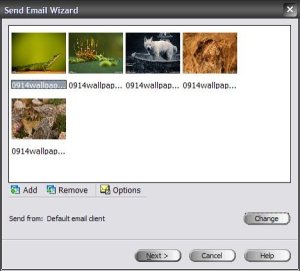
This is the first window you see after you select the photos from the
thumbnail view.


This is optional, it will resize and convert formats. Very handy for RAW or
TIFF images, you don't want to be emailing those at any size.


I left the first box checked and it found Windows Live Mail and created the
email to send. It also asked here if I wanted this to be a photo
email.


You can select even more pictures, if you forgot one or it was in another
folder.


This is the little viewer it gives you in case the
thumbnails in the above screen capture are not big enough.


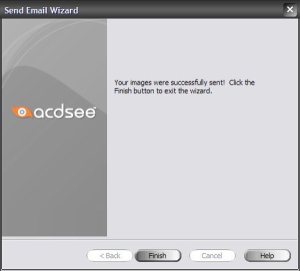
Last screen after you send the email in Windows Live
Mail.


This is the best way I have found to send photos in
email.


Chris.


Total Pageviews

Popular Posts