Wednesday, February 2, 2011

Google Cloud Print Extension Lets You Print Doc/PDF/Txt Files from Web Sites

Here is a method that could be used to print from a cell phone.


The idea behind Google Cloud Print is great—being able to print to your home printer from anywhere, but it’s not supported everywhere yet. Here’s an extension that helps fix that problem, slightly.

If you’re viewing a Word doc, PDF file, or .txt file in your Google Chrome browser—obviously viewing PDF files is the most likely—you can click the icon and print to your Google Cloud-enabled printer. Don’t know how to set that up? We’ve got you covered with a guide to Cloud Print.

Print Using Google Cloud Print [Google Chrome extensions]

news?d=yIl2AUoC8zA news?i=3pOC25fJ2OA:ciNX63VImI0:D7DqB2pKExk news?d=qj6IDK7rITs news?i=3pOC25fJ2OA:ciNX63VImI0:gIN9vFwOqvQ
3pOC25fJ2OA

Time Machine Tour 2011 - Alex Lifeson "Planet Rock" Interview

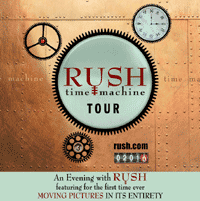
Time Machine TourToday Alex Lifeson gave a phone interview with the UK's Planet Rock radio. Although he covered much of the same territory that has been discussed in other recent interviews, he did discuss the expected setlist of the 2011 leg of the Time Machine Tour:

"We've decided to do exactly the same set that we were doing last year. We talked about changing out some stuff. Certainly we wouldn't add any other new stuff because we haven't really developed it yet beyond sort of that first stage of writing and arranging. But we thought it best to keep the show as it is." - Alex Lifeson, Planet Rock, February 2, 2011 - Thanks to RushIsABand for the headsup!
The 2011 leg of the Time Machine Tour kicks off March 30th in Ft. Lauderdale, Florida, will include the first ever filming of a US Rush Concert in Cleveland on April 15th, and will visit Scandinavia, Britain, Holland and Germany, with potentially more dates to be announced. Click here for the current list of 2011 tour dates.

March 30, 2011 Bank Atlantic Center. Ft. Lauderdale, Florida
April 1, 2011 Greensboro Coliseum. Greensboro, North Carolina
April 3, 2011 Bridgestone Arena. Nashville, Tennessee
April 5, 2011 KFC Yum! Center. Louisville, Kentucky
April 6, 2011 Huntington Center. Toledo, Ohio
April 8, 2011 Giant Center. Hershey, Pennsylvania
April 10, 2011 Madison Square Garden. New York, New York
April 12, 2011 United Center. Chicago, Illinois
April 15, 2011 Quickens Loans Arena. Cleveland, Ohio
April 17, 2011 Palace of Auburn Hills. Detroit, Michigan
April 19, 2011 Copps Coliseum. Hamilton, Ontario
April 20, 2011 Bell Centre. Montreal, Quebec
April 22, 2011 1st Mariner Arena. Baltimore, Maryland
May 4, 2011 Hartwall Arena. Helsinki, Finland
May 6, 2011 Globe. Stockholm, Sweden
May 8, 2011 Malmo Arena. Malmo, Sweden
May 12, 2011 O2. Dublin, Ireland
May 14, 2011 SECC Arena. Glasgow, Scotland
May 16, 2011 Motorpoint Arena. Sheffield, England
May 19, 2011 MEN Arena. Manchester, England
May 21, 2011 Metro Radio Arena. Newcastle, England
May 22, 2011 LG Arena. Birmingham, England
May 25, 2011 O2. London, England
May 27, 2011 Ahoy Arena. Rotterdam, Holland
May 29, 2011 Festhalle. Frankfurt, Germany
June 8, 2011 BI-LO Center. Greenville, South Carolina
June 10, 2011 New Orleans Arena. New Orleans, Louisiana
June 12, 2011 Frank Erwin Center. Austin, Texas
June 14, 2011 Don Haskins Center. El Paso, Texas
June 16, 2011 US Airways Center. Phoenix, Arizona
June 18, 2011 Cricket Wireless Amphitheatre. San Diego, California
June 20, 2011 Gibson Ampitheatre. Los Angeles, California
June 22, 2011 Gibson Ampitheatre. Los Angeles, California
June 24, 2011 MGM Grand. Las Vegas, Nevada
June 26, 2011 Sleep Train Pavilion. Concord, California
June 28, 2011 Sleep Country Amphitheater. Portland, Oregon
June 30, 2011 Rogers Arena. Vancouver, British Columbia
July 2, 2011 The Gorge. Seattle, Washington


The 2010 leg of the Time Machine Tour kicked off June 29th in Albuquerque, New Mexico, and concluded October 17th in Santiago, Chile. The 2010 tour ranked #29 on Pollstar's Top 50 North American Tours, grossing $26.4 million with 372,407 tickets sold over 36 shows. Visit the Time Machine Tour News Archive for complete tour details including the setlist, concert photos, videos, and essential links as well as previously posted news pertaining to the tour.

Click Here For Previous Tour News & Reviews


Click Here For Tour News & Reviews from the 2010 Leg of the Time Machine Tour

The Security Attacks Most People Have Never Heard Of & The Attacks Everyone Sort of Understands

We've all heard of worms, Trojan horses, phishing, and other common computer security attacks that aims to infect your system and steal your data. But what about bluebugging, smishing, and scareware? Brush up on your computer security terminology with these lesser-known attackers.

Malware is serious business. It can slow PCs down to a crawl. On the other hand, some of the terms security researchers have decided to name these sometimes annoying (and often damaging) pieces of code are downright charming.

Here are nine that stand out, followed by seven most people have heard of:

The Security Attacks Most People Have Never Heard Of


Smishing: Smishing or "SMS phishing" refers to a phishing attack that specifically targets mobile phones. The victim would receive an SMS with a hyperlink wherein a malware automatically finds its way in your phone or leads the user to a phishing site formatted for mobile screens. The term was brought on by David Rayhawk in a McAfee Avert Labs blog.

Botnet (Zombie PCs): A portmanteau of the words "Robot" and "Network," a Botnet is any number of internet computers that inconspicuous to their owners; forward e-mails (any of which include spam, malware, or viruses) to other computers on the internet. These infected computers are also known as "zombies". DoS attacks (Denial of Service) often rely on thousands of zombie PCs.

BlueBugging: A craze originally jumpstarted by a Malaysian IT Professional, bluebugging (not to be confused with bluesnarfing) allows a more skilled person to illegally access a cellular phone via Bluetooth wireless technology. This act often times goes unnoticed without any proper notification or alerting to the phone's user. A vulnerability such as this allows phone calls, SMS messages to be read and sent, phonebook contacts to be erased, phone conversations to be tapped, and other malicious activities. But much to the hacker's dismay [I think the hacker
knows the limitations… perhaps the point is that widespread impact is minimized
because of the range…], access is only attainable within a 10 meter range of the phone.

Pod Slurping: Coined by US security expert Abe Usher; Pod Slurping is when your iPod or any portable USB storage device begins to surreptitiously copy large amounts of files from your computer to its hard drive, it's engaged in something called "Pod Slurping". Pod slurping is becoming an increasing security risk to companies and government agencies. Typically, access is gained while the computer is unattended, and this process can occur in as little as 65 seconds.

Ransomware: A program that makes a computer near unusable then demands payment in order for the user to regain full access. It "kidnaps" the computer! Ransomware is also commonly referred to as a "cryptovirus" or "cryptotrojan." Examples of Ransomware include Gpcode.AK, Krotten, and Archiveus. Ransomware was originally a with a trojan called PC Cyborg, created by a Dr. Joseph Popp.

Scareware: Scareware is software that tricks people into downloading or purchasing it, under the guise of fixing their computer, when in reality the faux anti-virus program is the real problem. Scareware programs often run a fictitious or careless system scan, and then present the user with a list of malicious programs that must be corrected, always leaving itself off of the list. The scareware then informs that in order to fix these "problems" it will require the user to pay a fee for a "full" or "registered" version of the software. Examples of scareware include: System Security, Anti-Virus 2010, and Registry Cleaner XP.

Sidejacking: Sidejacking is a hacking technique used to gain access to your website specific accounts. Websites typically encrypt your password so it cannot be stolen, but then send you an unencrypted "session-id". The session-id is either some random data in the URL, or more often, random data in a HTTP cookie. A hacker who finds the session-id can then use it to gain access to the respective account. Thus enabling the hacker ability to read your email, look at what you've bought online, or control your social network account, and so on. Robert Graham, who pulled together a variety of known and new vulnerabilities and packaged them into an automated session snatcher, was responsible for this term.

Black Hat: "Black Hat" hackers are those people who specialize in unauthorized breaching of information systems, often times attacking those containing sensitive information. They may use computers to attack systems for profit, for fun, or for political motivations. Attacks often involve modification and/or destruction of data which is done without authorization. They also may distribute computer viruses, internet Worms and deliver spam through the use of botnets.

White Hat: A "White Hat" hacker describes an individual who identifies a security weakness in a computer system or network but, instead of maliciously taking advantage of it, exposes the weakness, and repairs the vulnerability protecting the network from unwarranted intrusions or attacks. The term is taken from old western films, where the white hat cowboy is portrayed as the hero, and the black hat as the villain.

The Attacks Everyone Sort of Understands


Worm: Originating in a Xerox Palo Alto Research Center 1979 by engineers, a "Computer Worm" was originally designed to make programs run more efficiently, then later corrupted to be a destructive computer virus that can alter or erase data on computers. Often times, they leave files irretrievably corrupted or slow the PC down to a crawl.

Trojan Horse: A long time and common infection found amongst even the newest of computers, this destructive program disguises itself as a harmless application. Although Trojans are incapable of self-replication, they are still just as destructive as a computer virus. In an act similar to its Greek origin, often times a Trojan horse opens up a backdoor to your computer enabling potential viral infections and allowing hackers to control the PC. Origins trace back to MIT hacker turned NSA spook, Dan Edwards.

Phishing: Originated by hackers who were stealing America On Line accounts by scamming passwords from unsuspecting users, "phishing" is the age-old crime of taking ownership of sensitive information from third parties (phishing scam victims). Information includes usernames, passwords, banking information, and credit card numbers. This is typically accomplished from sending someone an e-mail fraudulently claiming to be a legitimate company, or redirecting someone to a website that looks legitimate but isn't. More often than not, the direct result of being phished is your identity being stolen.

Script Kiddies: A term originated by Marcus Ranum to describe white hats who had no idea what they were doing, a script kiddy (sometimes plural as kiddies) is a derogative term, used by more skilled hackers of computer security systems, to describe young or less experienced hackers who still can be just as much a threat or annoyance. Utilizing cheap techniques, pre-written scripts and sometimes with assistance, the average script kiddy can exploit a weakness with computer networks. The difference is that these untrained hackers are often unaware of the potential consequences of their actions.

Keylogging: Originally designed by Perry Kivolowitz for a Usenet news group in 1983, Keylogging for the most part has become increasingly common, not to mention dangerous. It involves the recording of any keyboard input via internet connection. Not every instance of keylogging is necessarily illegal. It's sometimes done as a way to monitor teens and children.

Social Engineering: Brought into common knowledge by Kevin Mitnick (a hacker popular back in the day), Social Engineering involves obtaining or attempting to obtain private data by illegally persuading an individual to reveal otherwise secure information. The Information released by victims is often then used to attack a computer network. One common example would be when an employee at a large company is convinced to give out his employee identification, and then it is manipulated to gain further access to the said company's network, often sensitive information.

Crapware: Originally coined and reported by Marc Orchant on his ZDNet blog, Crapware is comprised of programs that use valuable resources on a computer's hard drive, such as memory or RAM, which are not necessary and are unused by the computer owner. Crapware can range from software loaded onto the system prior to sale to programs that are downloaded from the internet without the knowledge or consent of the user. One of the more common examples of Crapware is AOL being installed on PCs by the PC manufacturer.

The Computer Attacks You've Never Heard Of Security

Click here to read The Computer Attacks You've Never Heard Of

We've all heard of worms, Trojan horses, phishing, and other common computer security attacks that aims to infect your system and steal your data. But what about bluebugging, smishing, and scareware? Brush up on your computer security terminology with these lesser-known attackers. More »

Tuesday, February 1, 2011

1 February, 2011 23:57

Neil Peart - The Power Of Magical Thinking


Battlestar Galactica – Caprica Map of the 12 Colonies (Wallpaper Also Available)

Are you a Battlestar Galactica and Caprica fan? If you are missing these two wonderful television shows then you can bring part of the magic back into your home with this detailed poster size map of the 12 Colonies.

From the website: Intergalactic travelers and stargazers need never be lost in the Cyrannus star system if they have this in their back pocket: the first and only official map of the 12 Colonies of Kobol.

It’s the most authoritative and complete rendering of the Colonies that’s ever been made. This richly detailed map from QMx features a wealth of information on each colony – everything from population stats and local attractions to pyramid team names and brief histories.

The full-color map measures 26″ x 39″, is printed on 100-pound satin-finish paper, and is available for $14.95.

Battlestar Galactica Map of the 12 Colonies [via BoingBoing
& io9]

Bonus!

You can access a wallpaper size image of the map here (2000*1350 pixels):

Battlestar Galactica Map of the 12 Colonies Wallpaper

maLb-T3sk0I

David Farland - Chaosbound: The Eighth Book of the Runelords


The stark, dark and elegiac eighth installment of Farland's Runelords fantasy saga (after 2008's The Wyrmling Horde) centers on heroes Borenson and Myrrima, fresh from a gallant fight against unspeakably evil world dominators. Flameweaver Fallion, trying to unite the shattered One World, binds Borenson with Aaath Ulber, a giant horned berserker warrior. As their worlds and personalities merge, Borenson loses his human identity and family, but acquires a superhuman mission: to help Fallion bind all the worlds, uniting humans and defeating the wyrmlings forever. In this somber celebration of brutality, Farland ponders the fuzzy line between honor and obsession in a world where compassion comes with a high price. As the series grows in complexity, its appeal narrows, mostly drawing readers who like philosophy and complex machinations soaked in mud and blood. (Oct.)
Copyright © Reed Business Information, a division of Reed Elsevier Inc. All rights reserved.

Review


Praise for the Saga of the Runelords:

“The Runelords is a first-rate tale, an epic fantasy that more than delivers on its promise. Read it soon and treat yourself to an adventure you won’t forget.”
—Terry Brooks, New York Times bestselling author of The Gypsy Morph

“David Farland’s Runelords books are among the best fantasies on the market today. Great characters, a fascinating concept, and some really nasty monsters make each novel a pleasure to read.”
—Kevin J. Anderson, New York Times bestselling co-author of Paul of Dune

“Farland has created a vivid, detailed, different world that becomes perfectly believable.”
—David Drake, author of The Gods Return


Product Details


  • Format: Kindle Edition

  • File Size: 551 KB

  • Print Length: 352 pages

  • Publisher: Tor Books; 1 edition (April 1, 2010)

  • Sold by: Macmillan

  • Language: English

  • ASIN: B003JBICOS


Syd Barrett: Art and Letters exhibition announced

This afternoon, Syd Barrett: Art and Letters (http://gallery.ideageneration.co.uk/), the largest ever exhibition of Syd's artwork, has been announced. It will be held at the Idea Generation Gallery in London from 18th March to 20th April 2011. Celebrating Syd's creative output as a visual artist the exhibition will bring together the largest and most comprehensive collection of his artworks, letters and photos to date. Revealing a lesser known side of Syd's creativity the original artworks will be exhibited alongside previously unseen photos of Syd and his band mates, and the letters he wrote to his first love Libby. The unique exhibition will launch alongside the publication of Barrett, the definitive visual companion (http://www.brain-damage.co.uk/latest...order-now.html) to the life of Syd Barrett. As with the book (which is selling quickly, so ensure you get your orders in soon), the exhibition has been organised in conjunction with the Syd Barrett Estate and in co-operation with the Barrett family. The exhibition has been produced and curated by Essential Works, Idea Generation Gallery, Will Shutes and Brian Wernham. The Idea Generation Gallery is at 11 Chance Street, London E2 7JB, and more information can be found at their website:


Rock & Roll at the Movies (Posters)

Here's some some posters for rock and roll documentaries and concert films. 


Jimi Plays Berkeley, 1973. Jimi Hendrix.


Yessongs, 1975. Yes. Art by Roger Dean.


The Kids Are Alright, 1979. The Who.


Gimme Shelter, 1970. The Rolling Stones.


The Song Remains the Same, 1976 (Japanese). Led Zeppelin.


Get Down Grand Funk, 1970 (originally released as Mondo Daytona in 1968). Grand Funk Railroad.


via Fantasy Ink by tom on 1/21/11

Total Pageviews

Popular Posts