3-D Alien Worlds #1, July 1984. Cover art by Joe Chiodo.

UFO Flying Saucers #5. Gold Key, 1975. Art by Luis Dominguez.

U.F.O. Seeing Is Believing, n.d. Art by Erv Gnat.

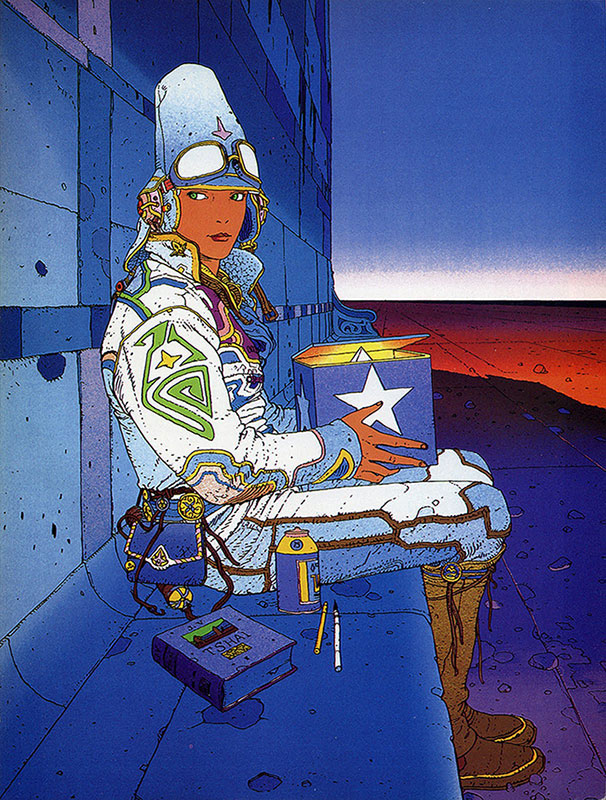
 Every week I'll be bringing you a comic book cover that I feel eclipses others out there—to the point I might just have to own it when released! This week: Elric: The Balance Lost #10! Nothing like Elric art!
 Last week, I took a poll asking, "What characters make up your personality?" For me, not all of my characters are wholly wholesome. One of them is a downright prick most of the time. Thomas Covenant. Outcast. Leper. Unclean. The eBooks for Stephen R. Donaldson's opus are now available! Here's more about them and why you should read them if you haven't already!



While not true for all indexed files yet, it is likely that the site will eventually remove all torrent download links and rely solely on magnet links instead. The core reason for this is bandwidth, as torrent files are much larger than magnet links.
Piratebay users on the other hand may experience issues with magnet links. While most modern Bittorrent clients support them, they may slow down the downloading of the needed data, especially during the beginning and if a torrent is not well seeded. They can also not be used for services that turn torrents into direct http downloads.
The free userscript ThePirateBay: Magnet to Torrent brings back torrent download links on the Piratebay website. When you visit a torrent page on the Piratebay website without it, you may notice that the Get This Torrent link on it links to the magnet link only, and not a torrent file. With the userscript installed, you will notice that magnet links are now displayed as such, and that the Get Torrent File link links to the torrent download.

The biggest advantage of this userscript is that it retrieves the torrent file information in the background, and displays them instantly on the screen without any user interaction. Piratebay users who prefer torrents over magnet links will surely find this a useful userscript to install on their computer.
The userscript has been tested in Firefox, with Greasemonkey installed, and in the Google Chrome web browser, and it worked as intended in both browsers.
There are 12 active users currently online.
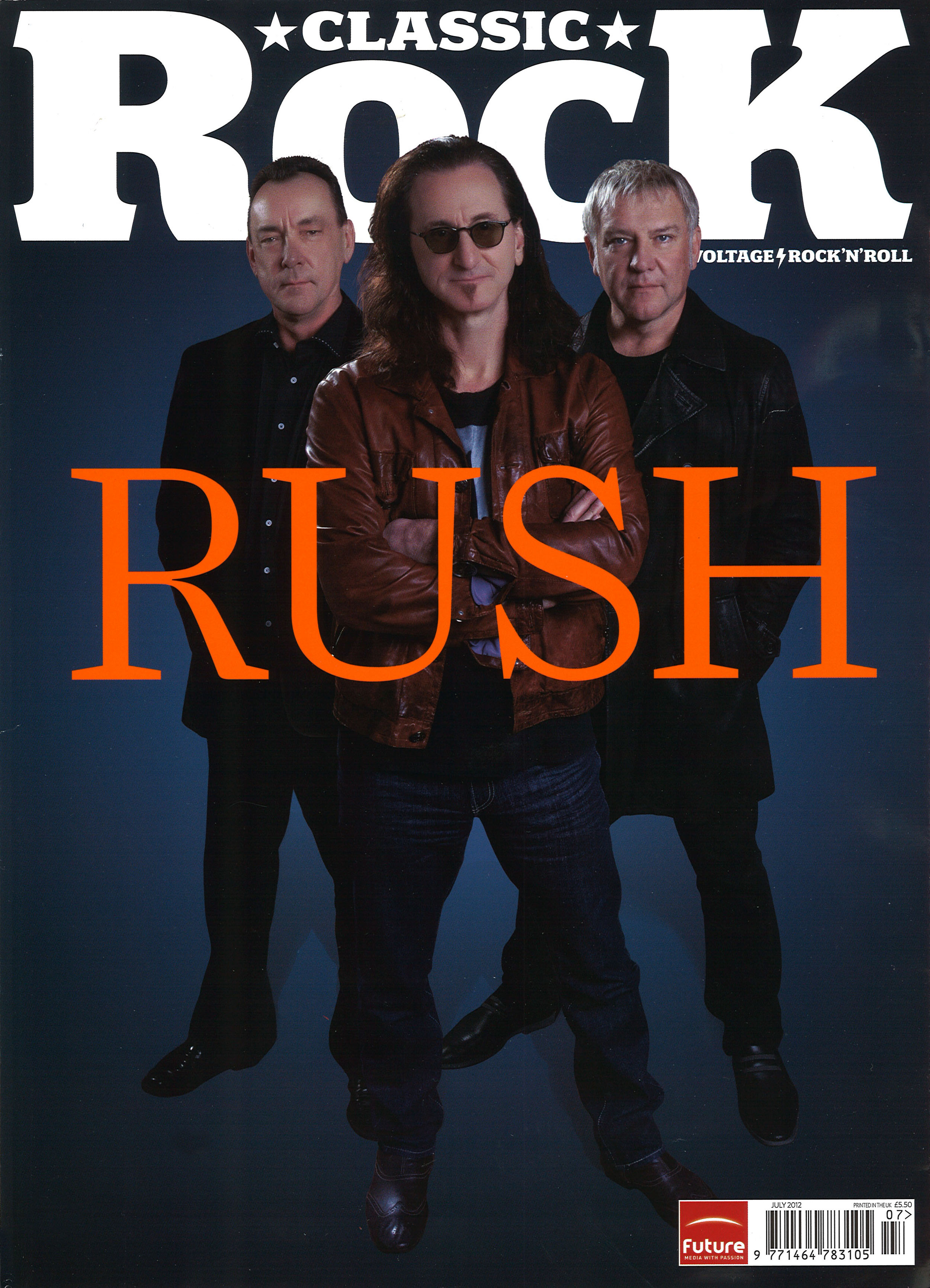
Rush
The Rise and Rise of the World's Biggest Cult Band
Classic Rock Magazine
By Philip Wilding
Portraits by Andrew MacNaughtan
July 2012
Click Any of the Following Images to Enlarge
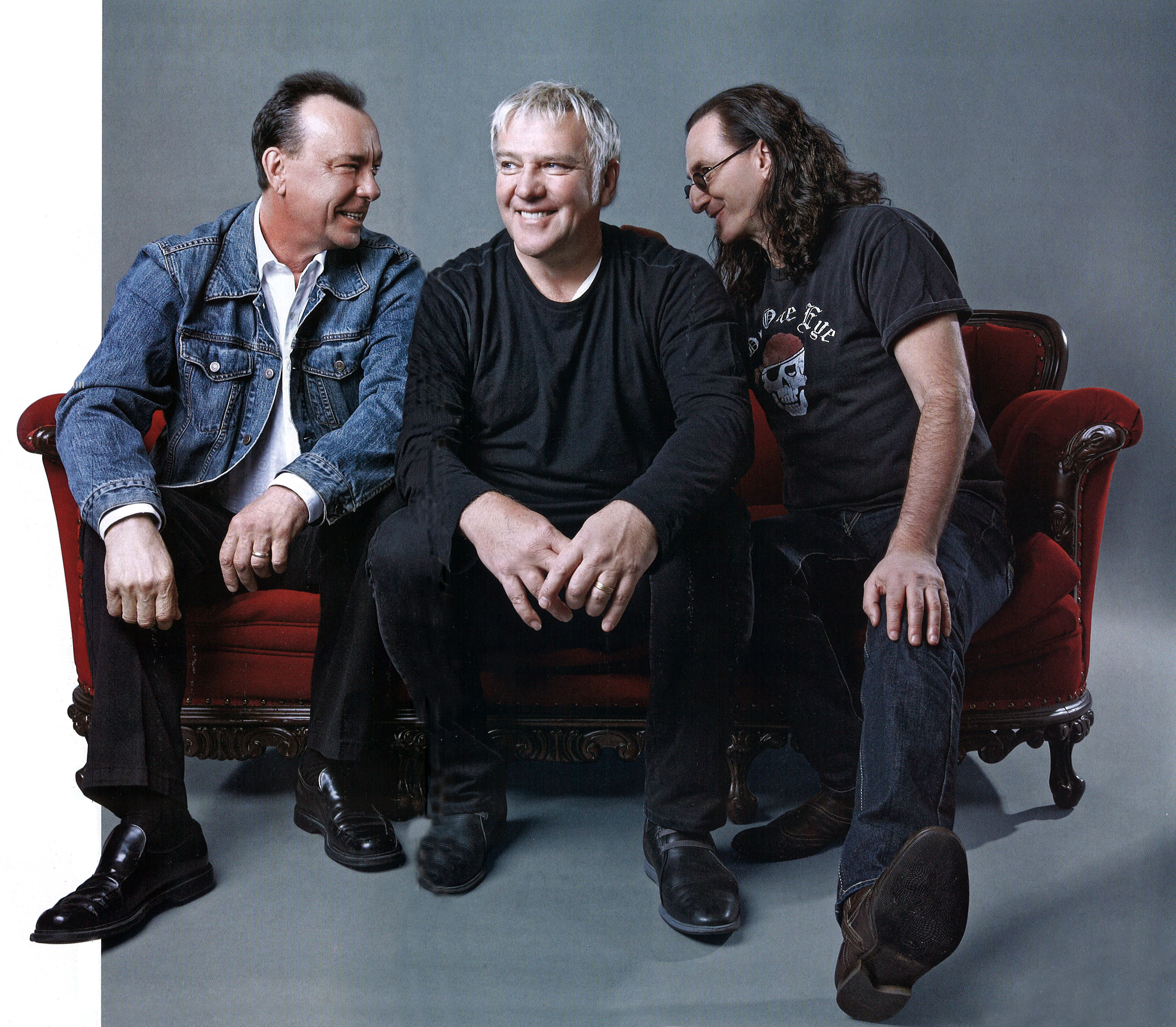
 The ultra-swish Beverley Hills restaurant is either an extreme exercise in discretion or Los Angeles has undergone some sort of power cut. The room's so dark that the waiters carry small torches, like ushers in a cinema, just so patrons can read the menu more easily. In the half-light, Alex Lifeson and Geddy Lee of Rush, various members of the band's management and label, and the man from Classic Rock pull back chairs and peer across at each other in the gloom. Waiting staff hover close by, their hands lit up by small points of light, as if the restaurant's home to a family of slow-moving fireflies.
Lifeson and Lee have moved into the hotel across the road while they're finishing the mix of Rush's new album, Clockwork Angels, at Henson Studios, a 20-minute drive to West Hollywood from here. As delighted as they are by the way their 20th studio album is turning out, after two months spent recording at Revolution Studio in Toronto, the initial mixing sessions in Los Angeles were brought to an abrupt halt by the death of the band's long-standing photographer and friend, Andrew MacNaughtan, from a heart attack at the age of 47. The band had done a photo session with him the day before his death.
"I remember getting back to Toronto after that first mixing session - we just packed up and went home. you know?" says Geddy, "Andrew had passed and I couldn't sleep and so I got up and was nursing a Macallans, flicking through the channels and I saw that [Rush's 2010 documentary] Beyond the Lighted Stage was on. I don't know why, but I just started watching it."
Alex Lifeson leans in to listen, nodding intermittently.
I started seeing things in it that I hadn't noticed the first time," says Geddy, "listening to things a little differently, because when I saw it the first time I really didn't want to - it was hard to watch. Watching yourself talk about your life, it's not for me. But, my god, how strange to see your life up there on a television show in the middle of the night and I thought about all the different people that can't sleep and are having the same experience I am, but they're watching about my life. It's just so bizarre.
"Billy Corgan, he blew my mind. The things he was saying about his relationship with his mother and what Entre Nous meant to him, and even Trent Reznor - those things meant a lot to me. You don't start doing this for any other reasons but your own and, of course, 40 years later, you never expected that you'd still be doing it. And then to hear other people describe your work in such a serious light just makes you feel like you've lived a life and that's such a nice feeling."
"That," says Alex with a grin, "and getting over the shock that a filmmaker made us interesting.
"We've had so many comments, like, 'It's a great film,'" he continues. "'I love the fact that they're sweet guys who grew up together and had this dream and they're funny and they're family guys.' It's interesting the things that they latched onto and relate to in terms of their own relationships and struggles." 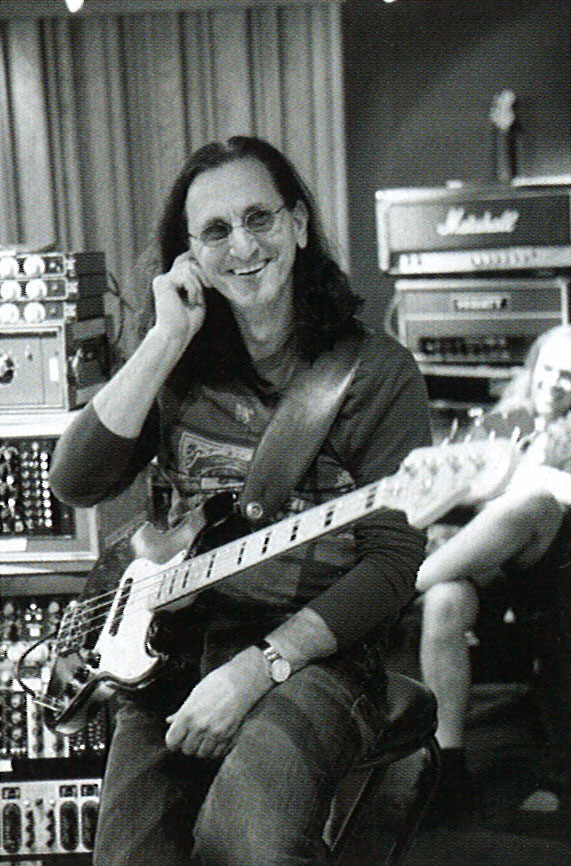 Geddy looks up from pouring over the extensive wine list. "There's been a huge shift in perception of us," he says. "But just because we're nice doesn't mean you should like our music."
There's a pause as he glances around the room. "Though it does mean we get into restaurants a little easier now."
Alex stabs his fork at the gargantuan starter - a crown of seafood that Heston Blumenthal might have built, dry ice billowing from its centre. The restaurant has comped the table.
"You spoke to Neil today, right?" asks Alex. eyebrows raised. "Did he stop for breath at any point?"
The Inn Of The Seventh Ray restaurant sits somewhere near the top of Topanga Canyon and is today alive with a thrumming new-age version of Greensleeves and the sound of a babbling brook. Topanaga's been home to the musical great and the good for decades - an affluent, hillside bohemia that's welcomed everyone from the Doors to Tool into its neighbourhoods.
It's not hard to see the attraction on a sparkling spring afternoon. The tight corners leading up the canyon are worth it to get to the leafy plateau of a secluded main street. That the restaurant has its own bookshop filled with volumes on self-help and enlightenment comes as no surprise. That the soup on the menu is 'created through the vibrations of each day' seems perfectly plausible, especially after the first glass of Californian white and with the sunshine dappling through the trees.
"I thought," says Neil Peart happily, "that we could do yoga instead of an interview."
Just as CR is dreading the flourish of a yoga mat and an instruction to do the downward dog, Peart's lays his sunglasses on the table, keen to begin talking.
It's hard to underestimate me impact of Andrew MacNaughtan's death on Rush, not least on Peart. It was his decision to first use the photographer, and it was Andrew who first introduced Neil to Carrie, his second wife. They were, in every sense, firm friends. 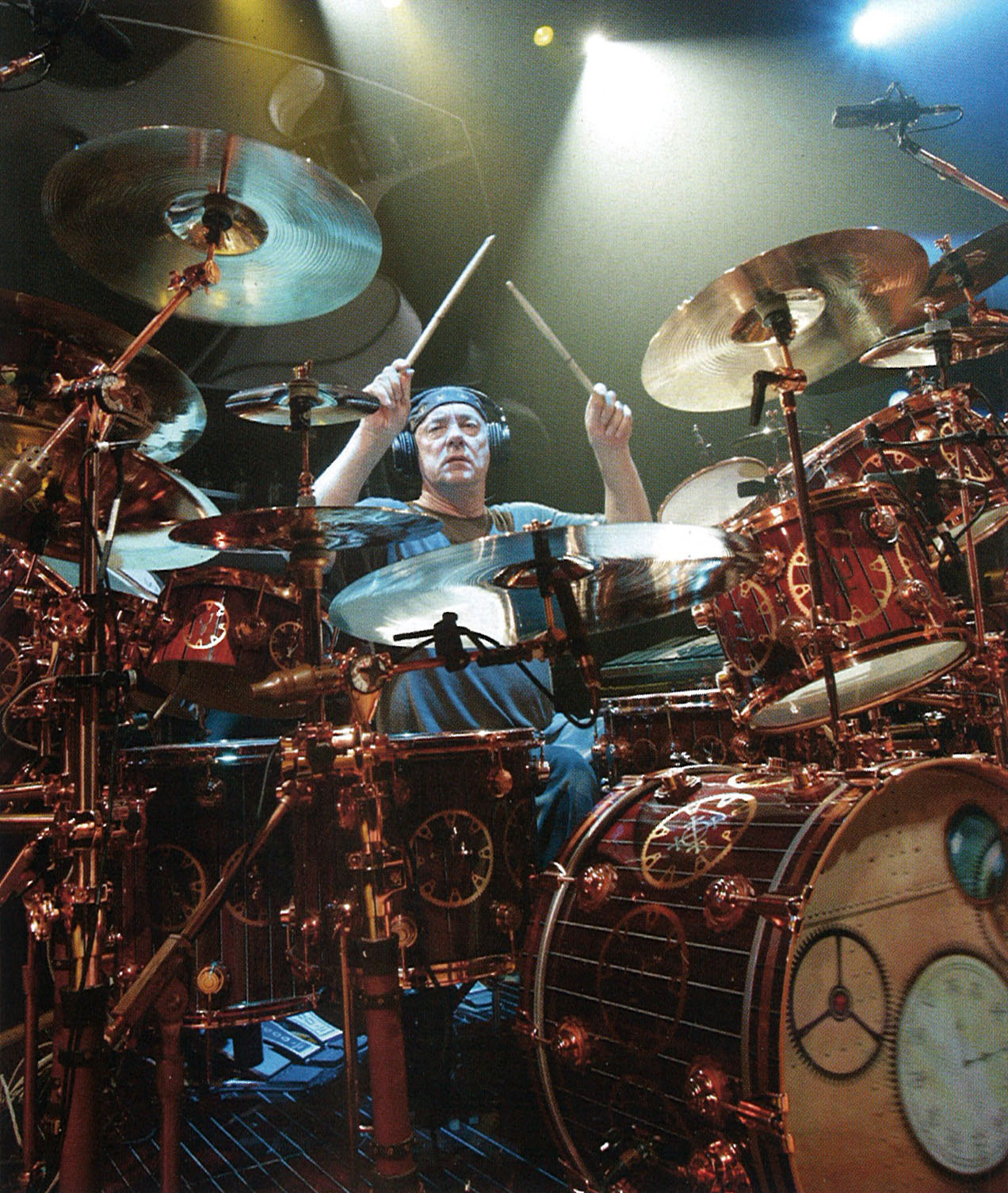 "We were very close to him, Carrie and I, to him and his partner, Alex," says Peart. "It was devastating, but more disbelief really. Shocked. It's still setting in. Anyone who's lost someone will know that you keep seeing them. 'Wait, there's Andrew,' you know? I remember he and I attended the South Park Halloween party. This was back in '98. He was an SAS officer and I was Mandy, the English biker chick, a leather-clad, foam-enhanced drag queen. I stood seven-feet tall under a gigantic blonde bouffant. It's weird, I just passed the store the other day. We went to get foam at this place at the bottom of La Brea. Andrew and I went there to buy the padding, then up to Hollywood to get the wig."
Since 2007's Snakes & Arrows, Rush have drifted, with a reassuring lack of guile on their part, towards the mainstream. An appearance on the The Colbert Report angered some diehard Rush fans when Stephen Colbert 'accidentally' walked on set as the band were in the middle of Tom Sawyer (Lee: "Some fans were really offended by that. They've made such a bond emotionally to the music that it's hard for them to take lightly. It was funny, but to them it was sacrilege. Lighten up, would you? We're just having some fun."). Then there was a glowing revival piece in Rolling Stone, a series of sell-out tours, a cameo in Judd Apatow's I Love You Man and the acclaimed and award-winning Beyond The Lighted Stage, which have all contributed to their ascension in the public's eye.
Peart's place at the heart of that film is pivotal to the journey it takes the viewer on. Whether it's on screen talking about the double tragedy of losing his daughter and then his wife, or his elongated trek across the American continent as the ghost rider trying to outrun his pain.
"It was such a delicate subject matter," says Sam Dunn now, one half of the production and direction team behind Lighted Stage. "We didn't want them to think we were prying, but the fact of the matter is that what happened to Neil did affect the band. They thought it was over."  Sam and his partner Scot McFadyen spent hours with the band and while both recognised the adversity Rush had struggled with, the pair were delighted to discover the band's underlying sense of humour, not least about themselves.
"We had Geddy and Alex in the edit and we said, 'Do you have any feedback?'" says McFadyen. "And they say, 'Yeah, we like it ... but could we have just a bit less of us?' There's the Rush humour in a nutshell. They make this serious, cerebral music, but there's rarely a serious moment."
Not least in the drunken dinner that the three attended at an old hunting lodge. It's worth picking up the second disc of the DVD edition of Lighted Stage for the extended highlights of that meal alone. By the end of it, Peart has laughed for so hard and so long that the drummer's the colour of an aubergine, "That was funny," says McFadyen. "It was so hard to get the essence in the film credits because we were with them for three hours and they kept getting drunker and forgot the cameras were there. That's how they are together: they're goofballs with each other. And they love their red wine!"
Even the man who's never watched that film is glad people got to see that dinner scene and, in a sense, the band's inner self. "It's good people saw that because it's real," says Peart. "That dinner was incredible. These three guys have been together all this time, but it's warm and friendly as can be. Because we're close, we balance each other, no one gets away with any of that shit, that's the difference. When bands start to separate then each wedge can do whatever it wants and no one can say anything.
"If you're going to stay friends then you're going to say something if someone's out of line in any way and we've kept egos in check all the way because of that. You can get an elevated opinion of yourself, but you can't be friends and get away with doing that. If you're going to be close then you have to stay level.
"Will I watch the film? I probably won't, no. I'm not interested in it. I like reading my stories over, I listen to our music from time to time, but I never watch DVDs. I don't look at myself - I'm not that kind of narcissist. And I know everything about it - my parents have seen it and everybody's told me everything about it. I've lived it." 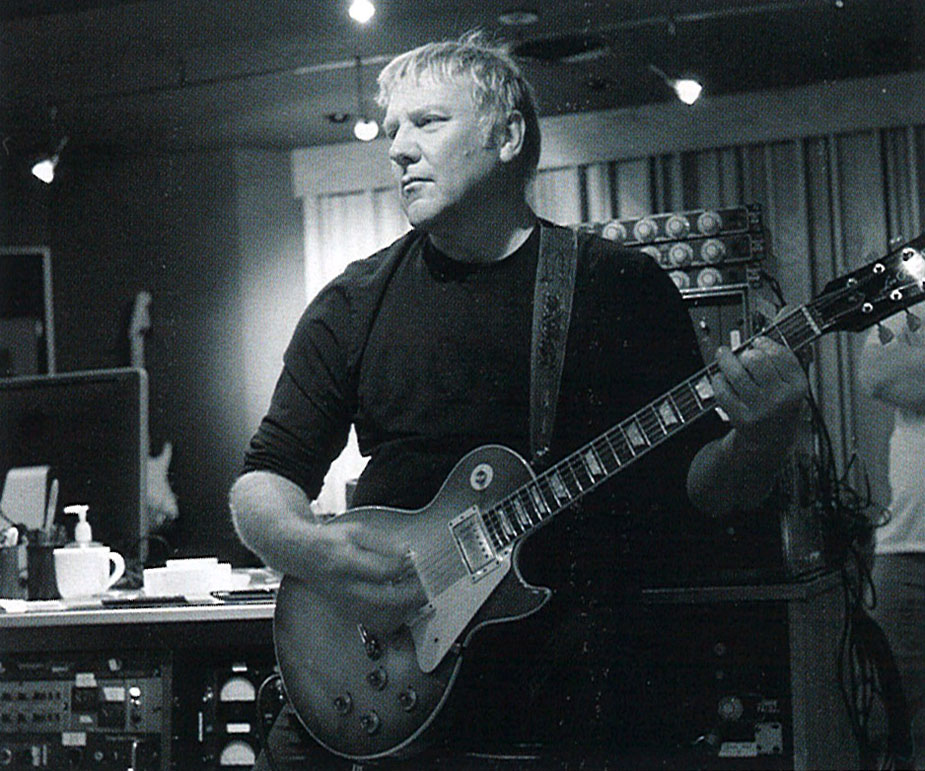 It's a day later and the band are at Henson Studios with irrepressibly upbeat producer Nick Raskulinecz who, admirably, is recording the Deftones in the morning and mixing Clockwork Angels in the afternoon. Out in the sunlit courtyard, Lee had stopped to show CR Charlie Chaplin's footsteps embedded in the concrete. Chaplin first owned these Hollywood Studios and made both The Gold Rush and The Great Dictator here. Later, when it was A&M Studios, America's answer to Feed The World, We Are The World, was recorded and filmed in the main studio here.
These days, since Jim Henson bought the place, a giant Kermit the Frog hangs out of one of the exterior walls and smaller, twin Kermits stand atop the gates as you enter the complex. Alice In Chains's Jerry Cantrell (who sometimes plays golf with Lifeson) is working in a studio down the hall. In the back room, Lifeson and Peart are hovering about as the final song on the album, The Garden, is being mixed. As the song reveals itself, each band member ribs the other as original parts of the song they recorded have been dropped down in the mix or removed altogether.
"Oh, Neil, didn't you come in earlier than that?" says Geddy happily.
In the small anteroom swathed with red and yellow drapes, the band are either sitting around or drifting in and out. Neil's just recorded a voice-over for one of the shorter segues on the album while everyone stood around grinning. The mood - after a long mix and the worst possible interruption with Andrew's death - is almost carefree. It feels like the last day of school. Earlier, when CR was interviewing Lifeson, Neil had appeared at the glass wall dividing the studios with a handwritten sign that said: "Stop Talking Now!" When CR brings it up later, he gives a look of mock-seriousness: "I was obviously talking to Alex," he says.
"Nobody takes the piss out of themselves to the extremes that we do: says Geddy. It's early evening and conversation has turned to the film shorts that are regular highlights of the band's live show. Lifeson, who has something of a minor acting sideline going on - watch out for him soon as Dr Figg opposite Billy Boyd in the adaptation of Irvine Welsh's Ecstasy is, everyone agrees, very keen to get in front of the camera. 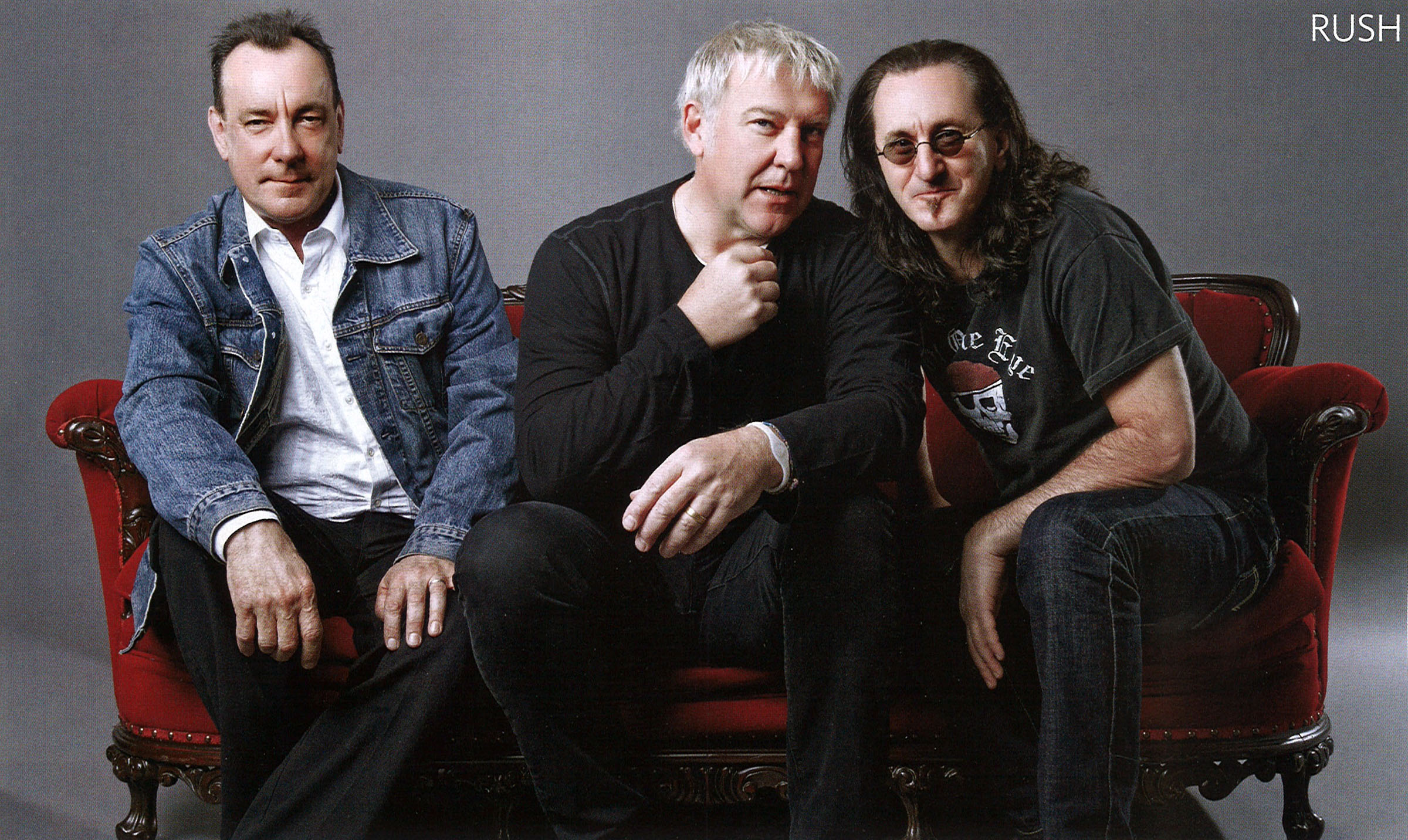 "I don't care what else he acts in," says Geddy, "he always acts best in our films. I always think of the most ridiculous get-ups for him. 'Al, how about you be a real fat guy?' He really takes to it. Those three characters that appeared in the films from the Time Machine tour are the three essential character aspects of us.
"When we designed those characters, I wanted them to represent the inner us: inside Big Al is this big, fat, crazy inventor, who loves to eat - that's Al. And Neil's got the furrowed-brow Irishman with the Waspy background and I'm this crazy sausage maker! The wigs are very good too.
"I think it's fun, and sometimes it's funny to watch the audience, especially somewhere like Helsinki - some things don't cross the language barrier. You look out and it's this sea of perplexed faces, an audience of bewilderment. We're going to continue to make them. I hope people like them! The first time I saw Jethro Tull was on the Thick As A Brick tour and they were so good playing-wise, but their production was so much fun - they had a sense of humour that kept occurring and it really stayed with me as what a lovely bonus to give an audience that's sitting there for three hours listening to this intense music - and our music is a little on the bombastic side, so I think it's nice to give some candy. It's nice to see them smiling."
"It's always been that way - Geddy handles the visual stuff, I'm our de facto graphic art editor," says Neil, who is, incidentally, studying the album artwork on his laptop. "And Alex, he's the musical scientist. We all have our roles in there. Plus, Alex looks dazzling when he's all dressed up."
Nick Raskulinecz first worked with Rush on Snakes & Arrows. As a long-term fan, he pushed for the co-producer's role. He remembers them then as a band who were trying to redefine themselves and find where they fitted in.
"I feel like they kind of lost their path a little bit," he says. "They didn't really know where to go and what to do and what to sound like because music had changed dramatically from Test For Echo to Vapor Trails, and then from that to Snakes & Arrows, music had changed again. There are five-year gaps between all those albums and things were really different, so it was, do we try and sound like music now or do we try and sound like us? Are we making songs for the radio? How do we make Rush be Rush in three and a half minutes? That's the standard - how do we keep people's attention? Do we go for new fans or do we please our old fans?" 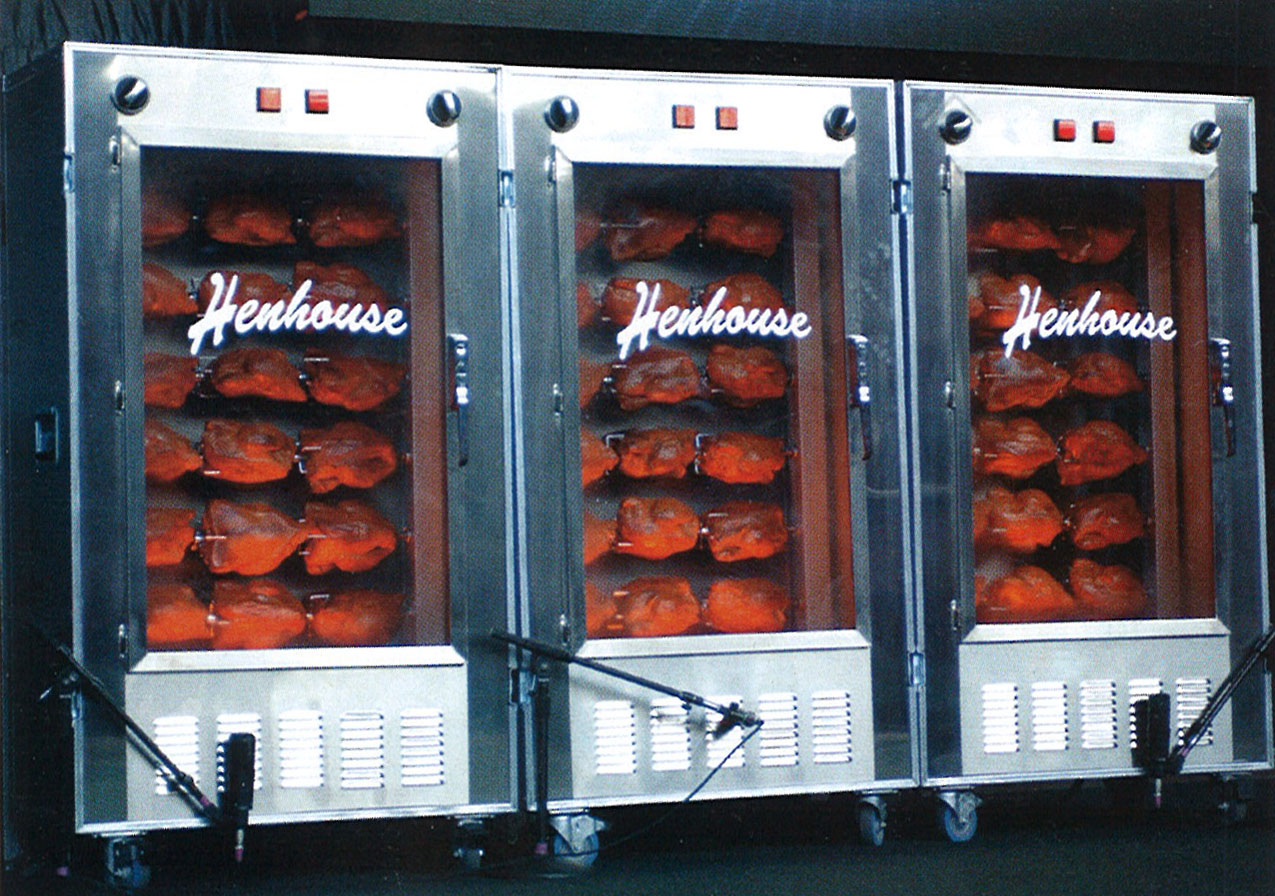 As history bears out, Raskulinecz managed to help the band embrace the new, but not be afraid to give a nod to their past - the ringing guitar chord from Hemispheres reappeared as a motif in Far Cry and, even more remarkably, bass pedals were back in the mix.
"To be fair," says Raskulinecz, "they didn't resist any of it. The hardest part about the bass pedals was finding a set because they didn't have them anymore. We called a company in Toronto and rented these bass pedals and had them shipped to the studio. Geddy's sitting there, we take the lid off and he's like, 'Whoa, these are the ones we used on the Permanent Waves tour and then sold!' I was like, 'You got rid of these? Are you kidding me?'"
Which brings us another five years later to Clockwork Angels. A complete concept album - the band's first - centered, in part, around a young man's quest set against a world of steampunk, clockwork and alchemy (Lee: "A concept album - I know, that's what we've been joking about all this time! We kept saying, 'It's Caress of Steel all over again. Get ready for the Down The tour part two!'"). Peart's borrowed from sources as diverse as Daphne Du Maurier, Joseph Conrad and Voltaire's Candide to move the story along.
Long-term fans of the band will find much to love: the thundering Headlong Flight recalls, in part, Bastille Day, while the expansive, multi-layered and intricate title track is as good as anything the band has ever recorded.
Peart says he hopes that song will be in their live show forever. "What was it that Oscar Wilde said: self-plagiarism is style?" says Peart. "We certainly do a few tongue-in-cheek nods to Bastille Day in Headlong Flight - that's deliberate.
"I got to reference my teacher and friend Freddie Gruber, who died last year, in there too. He gave me that line from the song, 'I wish I could do it all again', because there he is, 84, he grew up in New York in the 40s, worked out through Chicago and Vegas in the 50s, LA in the 60s and since then his path has crossed with everybody. His response to it all was, 'I've had quite a ride - I wish I could do it all again.' So I got to make it personal, but universal too, you know?
"The starting point with the concept was the steampunk idea. I love how it's a direct counterpoint to cyberpunk - it's like a different vision of the future. So I was enthralled by that theme and my character's journey through this world. I also had in mind Voltaire's Candide too, that was a germ of it. Plus there was so much stuff I'd been reading about the circus stuff, which became Carnies, from Robertson Davies' novels. And I'd read a lot of history from the south-western part of the US and that figured into the story of the explorer Coronado, who kept going out into the desert to find the fabled cities of gold. And The Wreckers was actually from Daphne Du Maurier- that's been in my mind for 30 years. I guess it's an episode in Jamaica Inn. So all of that coalesced into the character and the history of the story, the whole concept."
Almost 40 years into their career, Rush are changing the way they get things done. The Time Machine tour saw them improvising, for the first time, live on stage. Each night, Working Man became an exercise in pushing things as far as they could go. That transferred to this latest album. For the first time ever, Peart didn't prepare his drum parts but just came in and played them live: 75 percent of his playing on Clockwork Angels is improvised and was done in one take.
Lifeson says as he's 58 now, he couldn't give a shit about how people perceive him or the way the band works. His attitude, happily, appears to be spreading to the rest of his bandmates. "Certainly, a lot of it is confidence too - we feel very confident in our playing and where we are and where we're going," he says. "I've got nothing to prove - I'm just going to do what I'm going to do and let it go. And that's what happened. Ged and I were getting these drum tracks back from Neil and were like, 'My god, that's amazing - he never plays like this!' There are so many parts and so many cool things and consequently, that gets you all fired up and you try a bunch of different things.
"Hence Ged and I swapping instruments on The Wreckers. We were on a break and Ged picked up one of my guitars and he started messing around, and I remember he got up and came back with some lyrics. Then he sat in the corner playing the melody for the verses and I thought, 'Wow, this sounds great.' He just wanted to put it down very quickly and I grabbed his bass and we ended up recording the demo with him playing guitar and me playing bass - it was great! He played on the record, but it's my bass part, which is really cool. When we swap instruments, we sound like Barenaked Ladies, which was a surprise. We had to Rush-ify the song."
Lee says they've never played better live than on this last tour. Also, because of the live jams on the Time Machine tour, they've gone back to writing and working as a band the way they did when they were starting to make their mark on the world. 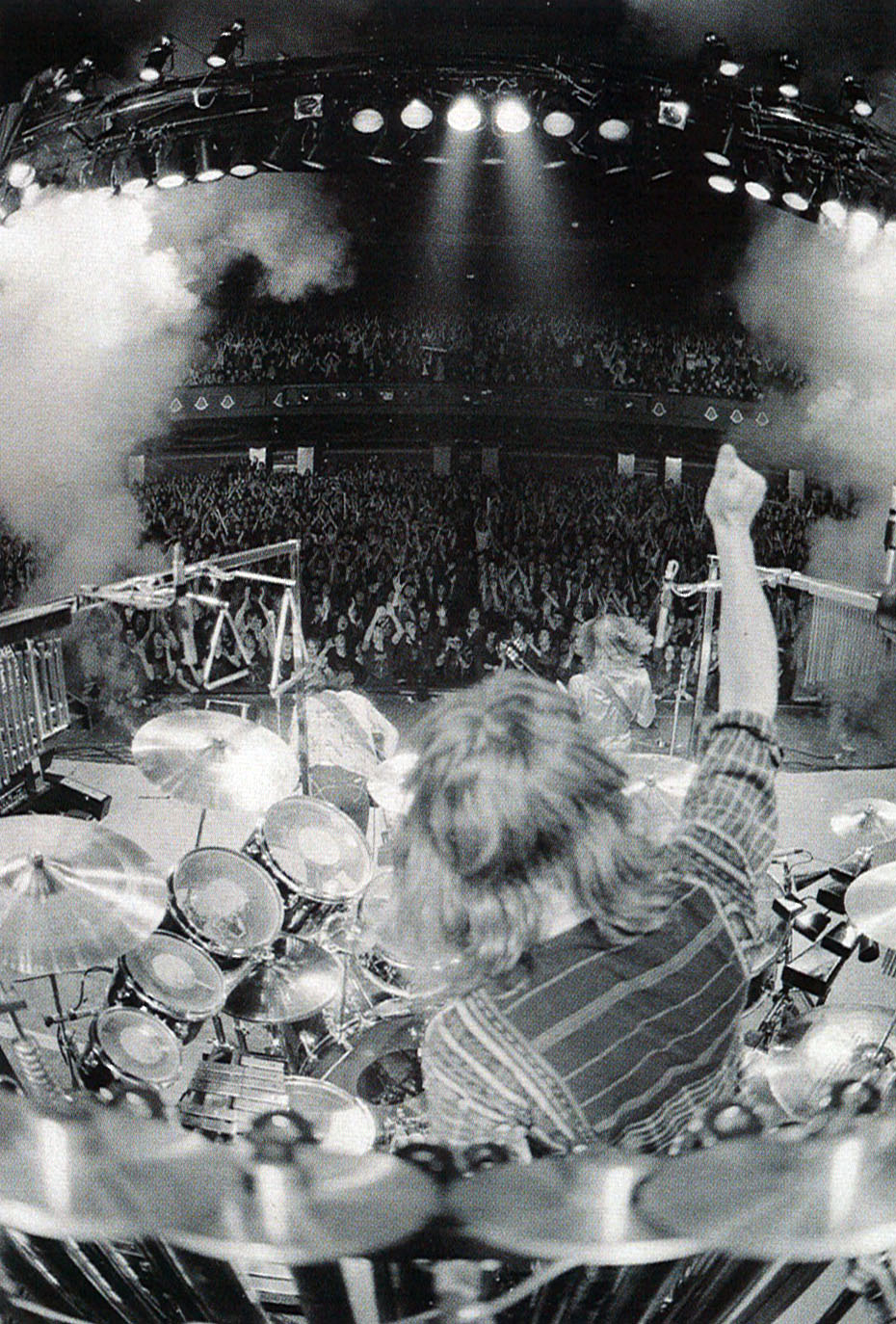 "I don't know why we took so long to get back to that place," says Lee. "You have ways of writing and sometimes you ignore the obvious. And the obvious always comes back to what you are as a band and we're players first, always. But somewhere along the way we missed that connection on how that playing informs the writing.
"We forgot that's how we used to write in the old days - that's how we wrote Spirit of Radio, that's how Tom Sawyer was written, all of us together in a room jamming. So without realising it, our playing was informing our writing right from the get go and then we went away from that. We separated that from what I guess is essentially Rush."
After this record they'll be without a deal, which doesn't bother the band at all. They admit the live shows might be stripped back at some point as the long tours are finally taking their toll, but, in Alex's words, they're going to make records until they die. At one point during the mix in LA, they posit that the next few years would see the band finally playing some festival shows too.
"We were such control freaks for so many years," says Lee, "we didn't want to go anywhere where we couldn't control the environment, so we're learning that wherever we play, that's our show. And at the end of the day, it's about the playing and the songs and it'll be fine.
It's a very long way from the band's management offices in Toronto in the spring of 2002. Vapor Trails was just about to be released after the band's protracted and enforced sabbatical after the death of Peart's daughter and then his wife. At the time, Lee had told CR that: "I don't think about making more Rush albums really. I want to enjoy my life as much as possible. I know I can't really get on without writing, but I don't know whether it necessarily has to be with Rush any more.
"We did an album and it worked out. Hopefully the tour will be something we won't regret three months from now. I get tired of waking up with no throat and this is the most ambitious tour we've embarked on in 15 years and I hope that's not a mistake. Maybe it'll be the last big tour we do. Don't get me wrong, Vapor Trails is, in some ways, the most successful journey that the three of us have been on together so it's very possible that we'll repeat that experience, but I don't want to take anything for granted any more. After all that's happened, how can we?"
Time, as the saying goes, is a great healer. Ten years later, the three members of Rush are re-energised, goofy, having the time of their lives. They still complain about the long tours and talk about cutting the shows back, but never do (Lifeson: 'We've been saying that for 20 years - still hasn't happened), and these are the kind of stories Geddy Lee gets to tell now:
"When we were living at the London Hotel here, while we're mixing the first time around before Andrew passed, right around two or three in the morning I'd be just drifting off to sleep and I'd hear this acoustic guitar playing and I'd be, 'I know that sound.' And Big Al would be out on his balcony, which was right underneath mine - he'd had some refreshment, apparently - and he'd be playing to LA. He plays all the time.
"And I would just lie there in the darkness and look up at the ceiling with this huge smile on my face every night even if he had just woken me up. I knew the headspace he was in and I knew what he was doing - he was being Al and he was playing to LA. Those moments are forever - so sweet, so funny."
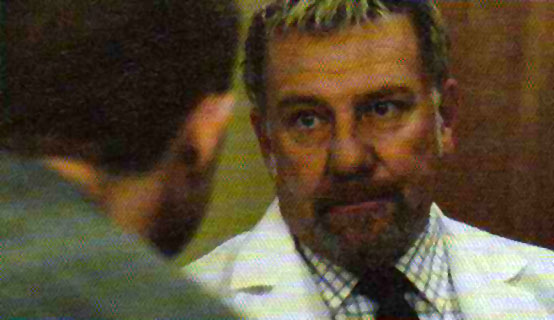 Obviously not content with just playing guitar in one of the world's most successful bands, in recent years, Alex Lifeson has ventured into the acting world. After playing the coveted role of, er, Cop 2 in Trailer Park Boys: The Movie in 2006, Lifeson expanded his repertoire by appearing in Suck (alongside other rock folks like Iggy Pop, Alice Cooper and Henry Rollins), and then as Undercover Prostitute #1 - complete with blonde wig and lipstick! - in Trailer Park Boys: Countdown To Liquor Day. His biggest role to date though, is as Dr Figg in the current adaptation of Irvine Welsh's Ecstasy. Alex tells CR how it happened.
In Irvine Welsh's Ecstasy, you play the shrink who commits Billy, how did that role come about?
Director Rob Heydon is a friend of a friend and we'd met some years ago at a social event. He asked if I would be interested in playing a role. Geddy and I were working on the new album at the time but I had a few days free. I played opposite Billy Boyd, who is a great guy and extremely talented actor and musician. I was very nervous and even though I knew my lines well, felt terribly self-conscious. In addition, I had to deliver my lines in a Scottish accent when I could barely speak English.You keep up a stream of steady, small roles, what does it give you that being a rock star doesn't?
Most of the roles I've played were casual, comedic moments and they have been fun and comfortable partly because they were light and improvisational. I feel quite comfortable being a bit of a clown. I do feel out of my comfort zone with roles, although rare for me, that require a more serious approach. After our scene in Ecstasy, Billy told me every scene can be terrifying for every actor so take a deep breath and don't let fear get in the way.Would you like to take the lead in something?
No, not a lead role but a supporting role in a Second World War film might be cool. I do like a uniform and they had some great ones.
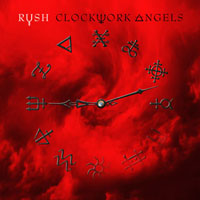 Rush - Clockwork Angels
Anthem / Roadrunner
Like a comet on the far fringes of the Milky Way, Rush appear on the great telescope of popular culture only sporadically. They've spent the past 40-odd years happily plotting their own course away from the eyes of the mainstream.
Recently, though, the Canadian trio have found themselves engaging with everything they'd previously run away from. The 2009 documentary Beyond The Lighted Stage, rightly saluted them as one of rock's original frontiersmen, with celebrity fanboys such as Trent Reznor and Billy Corgan lining up to ladle on the love. This led to Rush appearing on US comic Stephen Colbert's top-rated chat show, which pushed them further into uncharted territories.
And so, as Rush return with their first record in five years, and their 20th in total, both their stock and their profile are higher than ever. Whether the wave of goodwill spurred them on while making the album isn't clear but, if the end result is anything to go by, it certainly hasn't done them any harm.
Clockwork A11gels doesn't sound like the work of men entering their fifth decade as a working band. Where their last few albums have felt like triumphs of intention over execution, this one finds a band not just firing on all cylinders, but also doing a very good job of sounding more relevant than ever before.
The two teasers they handed out last year as part of Record Store Day, Caravan and BU2B, are representative of the album: taut but inventive, intricate yet never flashy. Both appear here, opening the album in a punchy one-two. Of the pair, Caravan edges it thanks to the way it hops between a muscular, circular riff and wide, chiming spaciousness in a heartbeat, though the admirably cynical BU2B - or Brought Up To Believe - is crucial to the album's concept.
Ah, The Concept The lyrical spine of Clockwork Angels is apparently a tale written by drummer Neil Peart and inspired by both the steampunk movement and Voltaire's 18th-century French satire Candide. They've roped in sci-fi author Kevin J. Anderson to help out with the conceptual heavy lifting via a spin-off novel that will presumably spell out what's going on. That will be useful, given that it's not especially clear what Clockwork Angels is actually about.
There's some stuff about watches and anarchists and a nagging feeling that it's all about being a tiny cog in some vast celestial machinery. There's even an unlikely nod to Daphne Du Maurier in The Wreckers, a freewheeling homage to the 60s rock the trio grew up listening to. Beyond that? Answers on a postcard.
Thankfully, Clockwork Angels isn't a slave to its concept; the songs are the master here. This is never more evident than on the title track, which corrals at least half a dozen different musical ideas into its seven minutes without ever sounding like it's showing off in front of its mates. The fact that it's topped off with a spring-heeled chorus shows a band with total and utter confidence in themselves.
Conceptual leanings aside, Clockwork Angels isn't a prog album. Of course the musicianship is impeccable, but it's never showy. They keep a lid on extending songs beyond their natural life; only three songs exceed the seven-minute mark. And Neil Peart has never sounded looser or livelier as he races around his drum kit. It all adds up to a clear-sighted, modern rock record.
And it's a terrific-sounding one, too - copper-bottomed but crystal clear, dense but light of touch. The Eastern-tinged flourishes that weave through the muscular The Anarchist enhance rather than overwhelm it; there's a tangible warmth to the exuberant Wish Them Well,
the album's most uplifting moment; and the ringing chords of The Garden provide a suitably stately finale to the whole show. Kudos here to co-producer Nick Raskulinecz, a man whose motivational skills are clearly matched only by the band's own willingness to be motivated.
There are echoes of Rush's past - you can catch a sniff of Bastille Day here and an echo of Working Man there, but it looks forward far more than it looks back.
So, is Clockwork Angels the best album of the year? It's too early to tell. The best album Rush have made? It's up near the top. The sound of a band who are entering their fifth decade more confident than ever before? Undoubtedly. And that, more than anything else, is the mark of true greatness.