Sunday, September 2, 2012

EXCLUSIVE INTERVIEW: KEVIN J. ANDERSON ON CLOCKWORK ANGELS (Rush)


Kevin J. Anderson is the multi-award winning author and collaborator on such novels as Resurrection, Inc., Climbing Olympus, Blindfold, Hopscotch, TheGamearth Trilogy, Star Wars: Darksaber, The X-Files: Ruins, Star Craft: Shadow of the Xel'Naga, Captain Nemo: The Fantastic History of a Dark Genius, TheYoung Jedi series with his wife Rebecca Moesta, and 14, and counting, Dune novels with BrianHerbert, as well as numerous short stories. His newest novel Clockwork Angels, which came from a story and lyrics by Rush's Neil Peart, will be coming out this September. Mr. Anderson was good enough to field some questions from SciFiPulse.

SciFiPulse: What's the last book you read and what did you think of it?

Kevin J. Anderson: I read David Farland'sNightingale and enjoyed it very much. Dave is a friend of mine and I've read many of his books in the past, but he told me this was very special to him. I put it at the top of my "To Read" stack and wasn't disappointed.

SFP: With eReaders starting to become so common, do you use one or do you prefer to have a "hard copy"?

KJA: I read books in hard copy when I have downtime in the evening or when relaxing in the tub. I use an eReader when I'm traveling (which I do a lot), and I listen to audiobooks on my iPod when I'm working out or driving; that way I can be reading all the time, in any situation. It's the story that matters, not the delivery system.

SFP: Your output of work is constant and strong. Do you ever get writer's block and how do you combat it?

KJA: Never get writer's block, primarily because I work on several projects at the same time, so if one stalls for any reason, I can switch to a different project that is more fresh and exciting. There are too many stories to tell to waste time with writer's block.

SFP: Which is easier for you to write: collaborations or solo work? You do both very well.

KJA: I enjoy both; I like the "game" of working with another writer, sharing ideas, brainstorming, building with each other's imaginations, but I also like to be doing things for myself. I expect to continue writing both.

SFP: How did you first meet Neil Peart?

KJA: My first novel, Resurrection, Inc., was inspired by their album Grace Under Pressure, a fact that I included in the acknowledgements. I autographed copies to the three members of Rush and mailed them in to the record label; about a year later, Neil had read the novel and wrote me back. We've been in contact ever since, nearly 25 years now.

SFP: How long did it take for the two of you to create your short story "Drumbeats"?

KJA: Neil and I talked a lot about writing, and he also sent me his very vivid descriptions of exploring isolated African villages. I was invited to contribute a story to a horror anthology with a rock theme, and I thought I could use Neil's settings and descriptions. The story didn't take particularly long, a week or two, since he had already written most of the descriptions. The story is still available as an expanded eBook.

SFP: Did you get to hear the songs from the Rush album as you were writing Clockwork Angels, or were you going from Neil's notes?

KJA: Neil and I discussed the story of the album as he developed the songs, and so the plot came together as the lyrics were finished. I read the song lyrics as he completed them, but the last pieces didn't gel until I heard the rough mixes of the songs, music and words (back in February). Then I started writing.

SFP: Which would you tell people to do: read the novel first, listen to the album first or read and listen in tandem?

KJA: Note that they are independent. You can enjoy the novel fully without listening to the album, even if you're not a Rush fan. But if you are a Rush fan, you've probably already heard the CD. I think you can hear the CD a couple of times, and play it while you're readeing the novel. The two should be greater than the sum of the parts.

SFP: Fans of Rush can expect to find several lines from many songs in the text. You did this very smoothly without winking or hitting the fans over the head. Did you keep track of how many you used?

KJA: No, I don't have a complete listing. I have been immersed in Rush music and lyrics for most of my life, and so when I wrote the prose, I found many natural ways to drop in familiar lines from songs. But I wanted it to be "natural" rather than a clunky nudge and wink. If you aren't familiar with the lyrics, I doubt you'll even notice the nods. But if you do know Rush, you'll appreciate them.

SFP: Dystopian novels are so popular right now, was it just luck that one of the lands in this book is one?

KJA: Rush's most famous concept album 2112 is a big dystopia, so there's a long-standing tradition. And while the plot of Clockwork Angels follows the format with many tropes of dystopia, we don't really think it's a terrible world to live in. Most of the places have their beauty and drawbacks. As for our timing being lucky with the popularity of dystopian novels…Well, we were just interested in doing a steampunk fantasy!

SFP: The lands in this novel are so unique and different from one another that I felt as though I could run around for hundreds of pages in each if you had wanted. Was there one land in the novel that you preferred over others?

KJA: Oh, that's tough to choose! I think I was particularly fond of the journeys with Commodore Pangloss, and I liked the desert surroundings of the Seven Cities of Gold, or maybe Chronos Square and the Clockwork Angels…or the Wreckers' floating island, or…

SFP: Do you believe that many people like your protagonist Owen Hardy are "brought up to believe" certain things before they know who they are?

KJA: I think we all are. That's the discovery/maturity phase of our lives, brought up to believe in a perfect world, in certain things, and we question them as we get older. Sometimes we run away and want to escape them entirely; sometimes we learn they are completely wrong, and sometimes we return to our roots.

SFP: The Watchmaker and the Anarchist are such strongly opinionated characters that neither can see/understand the other's side. Do think society is becoming, or has become, like these characters?

KJA: I can see the widening polarization, the orthodoxy of politics, in that people only want to hear a certain point of view. I wouldn't tell which character represents which politics, though!

SFP: The carnival is an amazing place for Owen and the reader. It gave me wonders I hadn't experienced or thought about since I'd read tales by Ray Bradbury. What can a carnival provide or represent that other locales cannot?

KJA: Everything seems magical there! And I did love Bradbury's Something Wicked and The Illustrated Man–and the carnival seemed the perfect balance between anarchy and order. But Neil had the vision of the carnival as one of his first images of the album.

SFP: Without revealing the ending, I was truly moved by its conclusion. I know some authors create their characters and go where they take them, while others have a clear ending in mind. I have to know, was Owen's ultimate fate always known to you and Neil or did it come as a surprise?

KJA: The concluding song on the album, "The Garden", is truly a poignant summation, so we always knew we were working toward it. I outlined the book by connecting the dots of the songs, but this ending emerged naturally from the plotting. It wasn't a surprise, but it sure felt right.

SFP: Outside of the cover jacket illustration, your novels are often not illustrated. Artist Hugh Syme illustrates this book. How do you feel about his work and what he brought to the novel? Did Syme make suggestions or provide inspiration as you and Neil corresponded?

KJA: Hugh contributed tremendously; he read parts of the drafts and found focal points that I hadn't seen (he was the one who picked up on the honeybee as a perfect symbol for the Watchmaker). Hugh was doing the illustrations for the songs, which appear in the CD booklet, as we were drafting the novel, so each image gave inspiration and setting for the scene. And then as we gave him drafts of certain scenes, he created new art exclusive to the book–particularly the clockwork gypsy, the alchemy college and the steamliner scoutship. Hugh and I worked together to crate a beautiful booklet to accompany the unabridged audiobook from Brilliance. I should also note the additional cool thing: Neil narrates the audiobook himself.

SFP: In addition to Clockwork Angels which will be coming out next month, are there any other upcoming works of yours that you'd like fans to be aware of?

KJA: I've got a very busy month: immediately after Clockwork Angles is released, Kensington will release Death Warmed Over, the first book in my humorous horror series about Dan Shamble, Zombie PI. I love this series! And then two weeks later, Titan will release my H.G. Wells steampunk novel The Martian War, in which young Wells heads off to Mars with his college professor T.H. Huxley to prevent the Martian invasion. And, we just reissued my first novel Resurrection, Inc., which is based on the Rush album Grace Under Pressure. So, yes, did I mention it's a busy month?

SFP: Thank you for letting SciFiPulse.net talk to you about your work!

KJA: Thanks!

Saturday, August 25, 2012

Spectacular new NASA video shows Curiosity Mars rover's daring touchdown (+video)

Shot by NASA's Curiosity Mars rover's descent camera, a new HD video released by NASA show's the craft's harrowing plunge through the Red Planet's thin atmosphere.

A spectacular new video shows the Mars rover Curiosity's harrowing Red Planet landing in sharp detail, while another captures the drama and excitement surrounding the historic Aug. 5 event.

The first video — taken by Curiosity's Mars Descent Imager camera, or MARDI — gives a rover's-eye view of the daring touchdown. NASA released a low-resolution version of this one just hours after the rover's landing; at the time, MARDI principal investigator Mike Malin promised the full-frame video would be "exquisite."

And indeed it is.

RELATED: Are you scientifically literate? Take our quiz!

The high-definition video chronicles the final 2.5 minutes of Curiosity's 7-minute plunge through the Martian atmosphere in real time, starting just after the rover jettisoned its heat shield. The first few seconds show the heat shield falling away toward the red dirt ofGale Crater far below. [Video: Curiosity's Landing in High Resolution]

Other milestones follow, such as parachute deploy and ignition of the engines on Curiosity's "sky crane" descent stage, which lowered the 1-ton rover to the Martian surface on cables. Audio from mission control at NASA's Jet Propulsion Laboratory (JPL) in Pasadena, Calif., plays over the video, describing the nail-biting action. 

As Curiosity nears the Martian surface, huge dust clouds billow around the $2.5 billion robot, kicked up by the sky crane's rockets. Then the view clears to show a close-up, static shot of scattered pebbles.

"Touchdown confirmed! We're safe on Mars!" Curiosity entry, descent and landing operations lead Al Chen announces, and deafening cheers erupt in the control room.

The second NASA video documents similar emotional outbursts from the crowds of onlookers that gathered at various places around the country to watch the Mars rover landing.

Over the course of 3.5 minutes, the scene shifts from mission control at JPL to other NASA sites, such as Ames Research Center in Moffett Field, Calif., Goddard Space Flight Center in Greenbelt, Md., and Johnson Space Center in Houston.

The video also captures the atmosphere at New York City's Times Square, The Planetary Society's Planetfest 2012 event in Pasadena and the Denver Museum of Nature and Science, among other places.

When Chen confirms the successful touchdown, these audiences cheer and clap wildly as well, showing how Curiosity's bold and unprecedented landing attempt had riveted millions of people around the country.

"Wow! This brings out the best in us!" Planetary Society CEO (and former TV "Science Guy") Bill Nye exclaimed at Planetfest, to deafening and sustained applause.

The good news has continued after landing for Curiosity, whose main task is to investigate whether Mars could ever have supported microbial life. While scientists are still checking out the rover and its 10 science instruments, everything is working well so far.

Curiosity has already snapped thousands of photos, taken a variety of science measurements and gone on a short test drive on the floor of Gale Crater. The rover could be ready to make its first big move — toward a science target researchers have dubbed Glenelg — within the next week or so, team members have said.


http://www.csmonitor.com/Science/2012/0824/Spectacular-new-NASA-video-shows-Curiosity-Mars-rover-s-daring-touchdown-video

Thursday, August 2, 2012

What’s Next After the Higgs?

Michio Kaku on July 30, 2012, 4:52 PM

Earth and Beyond

Higgs_next

The discovery of the Higgs boson was a real milestone for physics, a tremendous vindication of the hard work of thousands of physicists and engineers for the past 30 years.
But this is just the beginning. The recent Higgs boson is just the first of a series of new forms of matter and energy. The Higgs boson will probably get a Nobel prize for Prof. Peter Higgs and colleagues, but a shelf of Nobel Prizes awaits the physicists who can decipher the next generation of particles.
The Higgs boson was the last missing particle in the current Standard Model of particles, which describes just 4% of the known universe, and contains electrons, neutrinos, quarks, etc.
But 23% of the universe is made of Dark Matter, and 73% is made of Dark Energy, and we physicists are clueless to understand what they are. So most of the universe, 96% in fact, is beyond our present day understanding. (So all high school textbooks which say that the universe is mainly made of atoms are wrong and have to be revised.)
To understand the big picture of where all this fits in, recall that there are 4 fundamental forces which rule the universe:
gravity, electromagnetism, the weak nuclear force, and the strong nuclear force.
We physicists believe that, at the instant of Genesis, all four forces were probably unified into a single Superforce, which was highly symmetrical and beautiful. (The leading candidate for the Superforce is String Theory, which is what I do for a living. That is my day job).
All particles had the same mass (zero) and were manifestations of a single object, the Superforce, at the beginning of time, before the big bang. Think of it as a perfect crystal, gorgeous in its symmetry and beauty, but it had a flaw. It was unstable, and shattered into 4 pieces.
The universe today is highly unsymmetrical. We have rocks, planets, asteroids, comets, etc. Something must have shattered the original symmetry of the Superforce. We think the thing which shattered the symmetry of the Superforce was a series of Higgs bosons.
The first Higgs boson is called the inflaton, and we think set the big bang into motion. It put the “bang” in the big bang. (The press calls the Higgs boson the God particle, which makes physicists cringe. But there is some truth there. In the Bible, God set the universe into motion. Physicists believe the universe was created by a big bang 13.7 billion years ago. But what set the expanding universe into motion? We think it was a Higgs-like boson.)
We think that a particle like the “inflaton” shattered the original symmetry, so the Superforce broke into two pieces, gravity, and the grand unified theory (GUT), the later which contains all the matter in the universe.
i.e. Superforce  ->  Gravity + GUT
Later, another Higgs boson shattered the symmetry of the GUT, and we have the the GUT breaking into the strong and electro-weak force:
i.e. GUT -> Strong + Electro-weak force
Finally, we have the last Higgs particle (the one just found last month) which breaks the electro-weak force into the usual electromagnetic and weak nuclear force:
Electro-weak force -> Electromagnetism + Weak Force
So the Higgs just discovered is the latest in a series of Higgs boson, each of which breaks the original symmetry of the Superforce into the highly broken universe of today.
The leading candidate for the Superforce is String Theory, which is yet unproven. But the Large Hadron Collider might be powerful enough to create Dark Matter, a new form of invisible matter. So far, the leading candidate for Dark Matter is the sparticle, or super particle, which is a higher resonance of the string.
So in this picture, the Standard Model and Einstein’s theory of gravity is just the lowest octave of the string. But the string has higher notes or resonances, and we string theorists believe that Dark Matter is just a higher musical note of the string.
In conclusion, the Higgs boson is just the first of a series of new particles. One class of Higgs bosons, for example, was the match or spark which set off the big bang. So all of us, in some sense, are byproducts of this Higgs boson.
Next, we hope to find evidence of Dark Matter with the Large Hadron Collider, which may be a higher resonance of the string. And beyond that, we hope to find evidence of parallel universes and higher dimensions predicted by string theory.
So the adventure is just beginning. One day, we may find the Superforce, and perhaps fulfill Einstein’s dream of a theory of everything, which will allow us to “read the Mind of God,” as Einstein so eloquently wrote.
String theory, in fact, is the only theory which can give us a candidate for the mind of God. If string theory is correct, then the mind of God is cosmic music resonating in 11 dimensional hyperspace.

http://bigthink.com/dr-kakus-universe/whats-next-after-the-higgs?utm_source=feedburner&utm_medium=feed&utm_campaign=Feed%3A+bigthink%2Fblogs%2Fdr-kakus-universe+%28Dr.+Kaku%27s+Universe%29

Friday, July 13, 2012

Shark 'attack' caught on Myrtle Beach video

Wed Jul 11 12:20:52 PDT 2012

You Gotta See This: Shark steals fisherman’s catch at Myrtle Beach

A family received a surprising welcome while fishing in Myrtle Beach recently. view full article

A family received a surprising welcome while fishing in North Myrtle Beach recently.

In the clip sent to NewsChannel 36 Wednesday, the video shows what appears to be a roughly seven-foot bullhead shark jumping out of the water near a beach home to snag a five-pound Red Drum that was caught on Sarah Blume's fishing line.

The video was captured by William Moore of Franklinton, North Carolina on Tuesday behind the home on the Cherry Grove Inlet, according to CarolinaLive.com.

"We couldn't believe how it actually happened," Moore told the website. "We keep watching the video over and over and over again."

Moore said the group of fisherman used chum as bait to catch the shark again--this time while in a boat--but let it go.

http://www.charlotteobserver.com/2012/07/12/3378316/shark-attack-caught-on-mrytle.html#storylink=cpy

Thursday, July 12, 2012

Rush Hour

TWIP-120712-01.ss_full

Commuters disembark from suburban trains during morning rush hour at Churchgate Railway Station in Mumbai on World Population Day, July 11. According to a 2011 census conducted by the government of India, Mumbai has more than 12 million residents, making it India’s most populated city.

http://slideshow.msnbc.msn.com/slideshow/news/the-week-in-pictures-july-5-12-48151676/

Thursday, July 5, 2012

F is for Frazetta

F is for Frazetta:


Tarzan and the Golden Lion, 1964.


Chessmen of Mars, 1973.


At the Earth's Core, 1965.


At the Earth's Core, 1962.


Untitled, 1968.

M is for Mars

M is for Mars:


Four Classic Martians by Bernie Wrightson, 1977.


Chessmen of Mars by Roy Krenkel, 1969.


Marvin Martian by Virgil Ross, n.d.


Attack on Planet Mars, 1951.


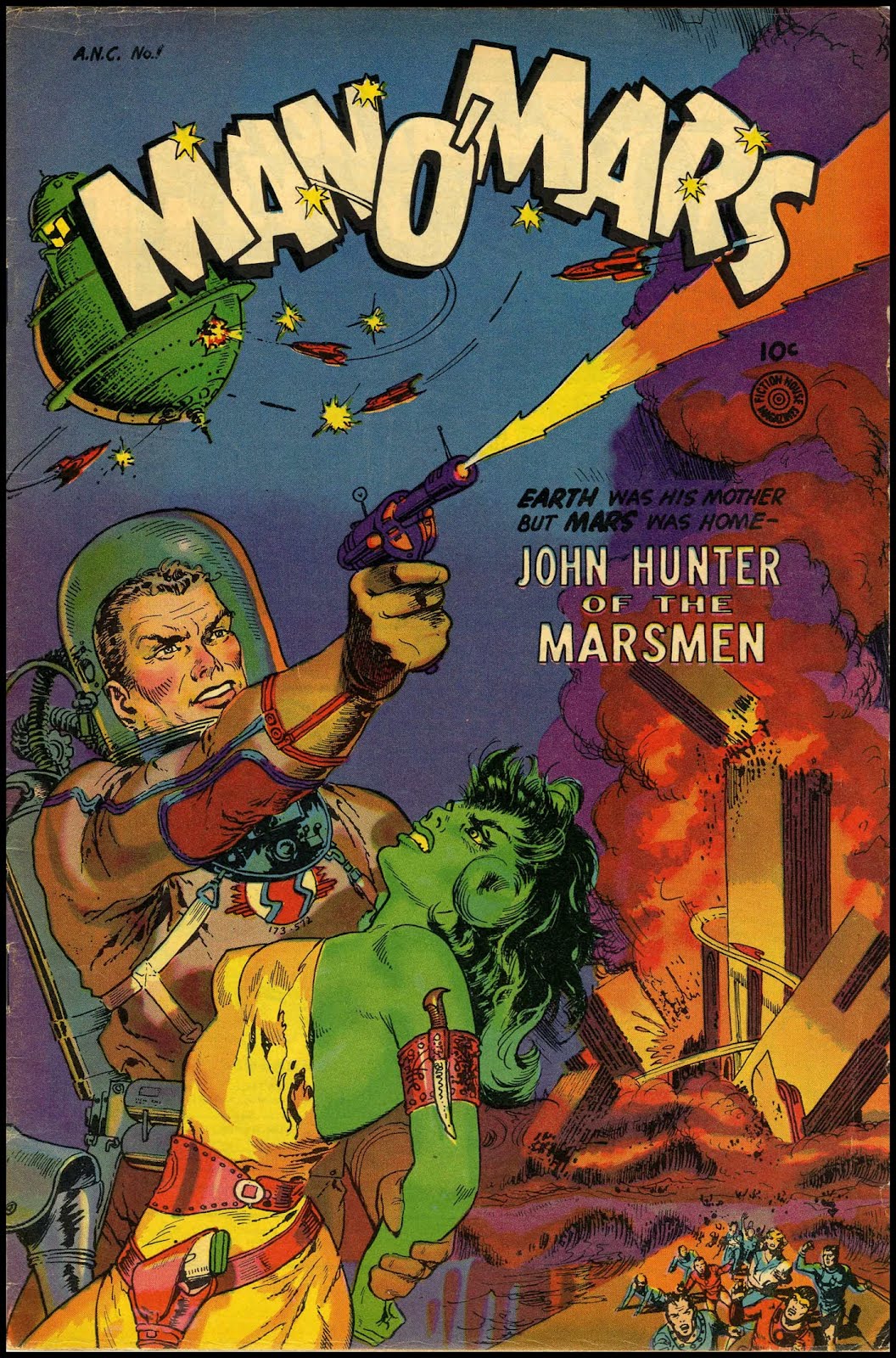
Man O' Mars #1, 1953.


Thuvia, Maid of Mars by J. Allen St. John, 1917.


Mars Attacks Card "The Monster Reaches In" by Norm Saunders, 1962.


John Carter and the Apes of Mars by Frank Frazetta, 1970.

Sunday, July 1, 2012

Beautiful Bird Photography by Kelly Colgan Azar

Kelly Colgan Azar prefers photography of small, fast moving birds because of the challenge they present. She never gets tired of birds as the subjects in her photos because of their unexpected beauty when seen through a lens. Kelly sure hopes that more people will take interest in birds!

If you would like to see more of Kelly's work, then check out her Flickr Photostream

Beautiful Birds

Brown Thrasher

Beautiful Birds

Yellow Warbler

Beautiful Birds

White-crowned Sparrow

Beautiful Birds

Wood Duck

Beautiful Birds

Ruby-throated Hummingbird

Beautiful Birds

American Robin

Beautiful Birds

Wood Thrush

Beautiful Birds

Carolina Wren

Beautiful Birds

Scarlet Tanager

Beautiful Birds

Baltimore Oriole

Beautiful Birds

Eastern Towhee

Beautiful Birds

Willow Flycatcher

Beautiful Birds

Baltimore Oriole

Beautiful Birds

Mockingbird

Beautiful Birds

Tree Swallow

Beautiful Birds

Louisiana Waterthrush

20 Great Pictures of Central Park NYC

New York is a beautiful and very interesting city, which is definitely worth visiting as a photographer. When in New York, you should also spend some time in Central Park.

central park

Disney's Manhattan by joiseyshowaa

central park

Central Park foliage photo-walk, Nov 2009 – 10 by Ed Yourdon

central park

Central Park "Dog in the Sun" by Tony Fischer

central park

Meer Reflections by Dave Whelan

central park

Dark Days Ahead by Guian Bolisaya

central park

Blanketed by A. Strakey

central park

central park early spring by Brendon

central park

Park benches in Central Park by David Joyce

central park

Walking in Central Park by Thomas Leuthard

central park

Willow tree by Ed Yourdon

central park

Jogging on a bright November morning by Ed Yourdon

central park

Zoom… by Yogendra Joshi

central park

Summer in Central Park by Kevin Dooley

central park

Central Park In Snow by Randy Lemoine

central park

walking the baby by Regan Vercruysse

central park

sunset at the rowing pond by joiseyshowaa

central park

Arriving by Angelo Amboldi

central park

Central Park – Bathesda Arcade – Just before sunrise by joiseyshowaa

central park

Inscope Arch by Diego Torres Silvestre

central park

Central Park HDR by C L

Total Pageviews

Popular Posts